A stump left behind after tree removal can create more work than most property owners expect. It catches mower blades, limits where you can plant or build, collects moisture, and can become a tripping hazard along a walkway or driveway. When you need stump removal service in Olympia, WA, the right approach depends on the stump’s size, location, root structure, and what you plan to do with the space afterward.
For many properties, stump grinding is the most practical solution. It removes the visible stump below grade so the area can be restored for lawn, planting, hardscape, or construction. For a larger site-clearing project, removal may also involve root work, grading, and preparation for the next phase of the property improvement.
Why Stumps Should Not Be Left in Place
An old stump can make an otherwise usable yard feel unfinished. On residential properties, it may sit directly in the path of a new patio, garden bed, fence line, or play area. On commercial properties, stumps can interfere with maintenance, pedestrian access, parking-area improvements, and landscape upgrades.
Stumps also change over time. As wood decays, the ground around it can settle. New shoots may emerge from the remaining root system, especially with certain tree species. In Olympia’s wet fall and winter conditions, decaying wood can hold moisture and attract insects and fungi that are better kept away from healthy landscape areas and structures.
There is no need to remove every stump immediately. A stump located deep in a wooded section of a large property may not affect daily use. But if it is near a structure, lawn, driveway, planned planting area, or outdoor living space, removing it is usually the cleaner long-term decision.
Stump Removal Service in Olympia, WA: Grinding vs. Full Removal
The terms stump removal and stump grinding are often used interchangeably, but they can describe different levels of work.
Stump grinding
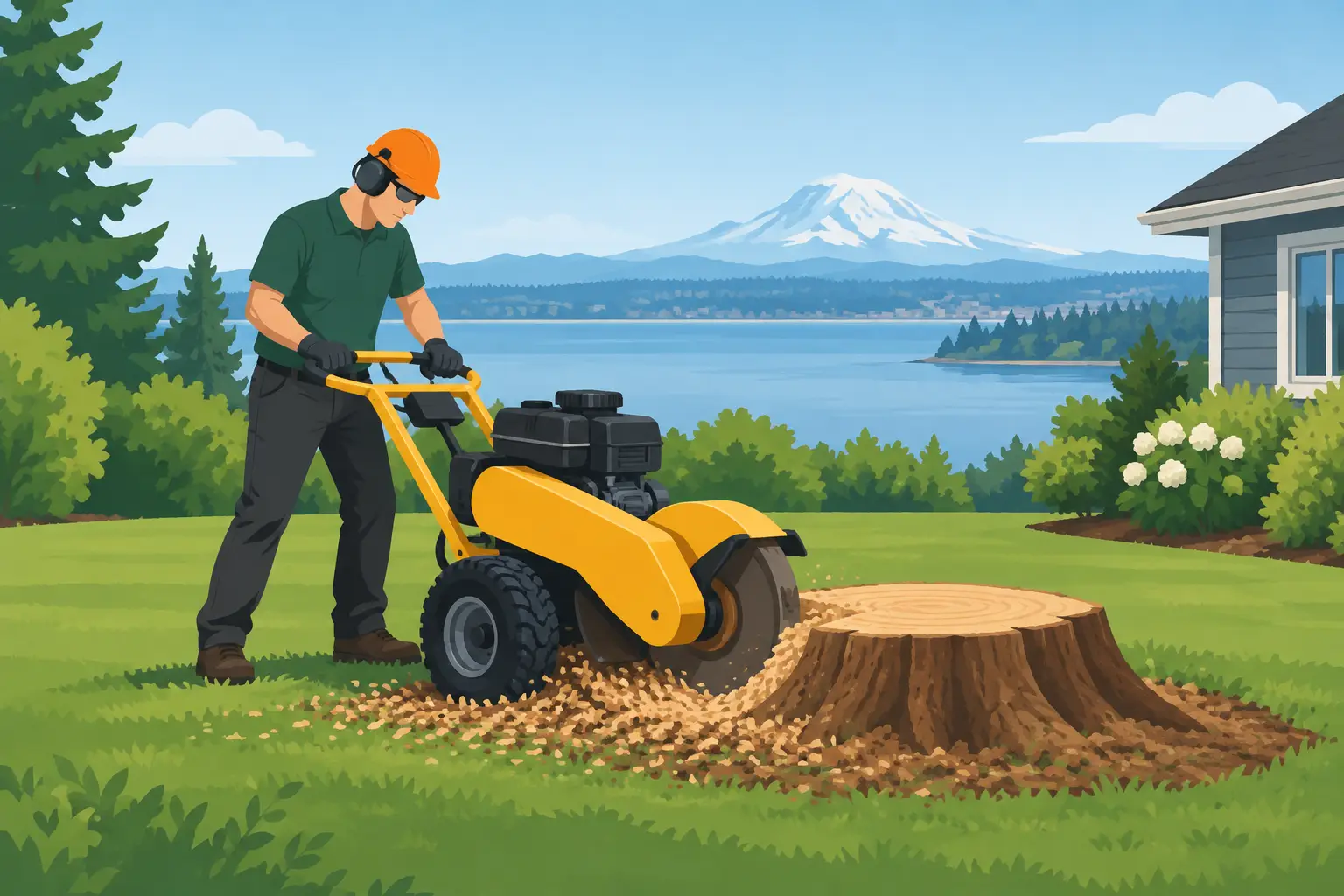
Stump grinding uses specialized equipment to reduce the stump into wood chips below the surrounding ground level. This is typically the preferred option for most homeowners because it is efficient, limits disturbance to the surrounding yard, and allows the area to be covered with soil, seed, sod, mulch, or new landscaping.
Grinding does not pull every root from the ground. Large roots naturally decay over time, and that is usually not a problem for lawn or garden areas. If a new tree is going in nearby, its location should be planned around the previous root zone rather than planted directly over the old stump location.
Full stump and root removal
Full removal generally involves excavating the stump, major roots, and surrounding soil. It is more disruptive, but it can be the better choice when a project requires a clear, stable area for construction. Examples include a new retaining wall, driveway expansion, foundation-related work, utility trenching, or certain paver and concrete installations.
The trade-off is that excavation can leave a larger hole and require additional backfill, compaction, and grading. The best choice comes down to the next use of the site. A lawn can often be restored after grinding. A new structural feature may need more extensive clearing and site preparation.
What Affects the Scope of the Work
A stump that looks simple from above may have a wide root system underground. A site visit helps identify the equipment access and cleanup needed before work starts.
Stump diameter is one factor, but it is not the only one. Tree species, age, soil conditions, slope, and the stump’s position all matter. A small stump beside an open driveway can be straightforward. A larger stump behind a fence, near irrigation lines, or on a steep backyard grade may require a more careful plan.
Olympia-area properties also vary widely. Some lots have narrow side-yard access, established gardens, drainage swales, mature trees, or wet ground during part of the year. Equipment needs a route into and out of the work area without damaging features that are staying in place. In some cases, timing the work for drier conditions can help protect the lawn and reduce soil disturbance.
Before any grinding or excavation begins, underground utilities should be identified. This is especially important near service lines, irrigation systems, outdoor lighting, drainage piping, septic components, and buried landscape features. A professional contractor will evaluate the work area rather than assume the ground is clear.
Planning for the Area After the Stump Is Gone
The best stump removal projects begin with a plan for what comes next. If the goal is simply to reclaim lawn space, the ground can be leveled, filled as needed, and prepared for seed or sod. Fresh wood chips from grinding should not be used as the only fill material because they break down and can cause the surface to settle. They can be removed, reused as mulch in appropriate areas, or mixed into a broader landscape plan.
If you are installing a garden bed, it helps to allow for good soil depth and drainage. If you are adding pavers, a patio, or concrete, the location may need excavation, a compacted base, and careful grading. If the stump was part of a larger tree-removal project, the surrounding area may also benefit from new planting, irrigation adjustments, or erosion control.
This is where using one contractor for connected work can simplify the project. Sunrise Landscaping LLC can address tree and stump removal as part of a broader landscape, hardscape, drainage, or outdoor construction plan. Instead of clearing a stump now and trying to coordinate the next phase later, property owners can plan the finished space from the start.
How to Prepare for Stump Work
Property owners can make the process smoother by clearing movable items from the immediate work area. Patio furniture, planters, toys, vehicles, and loose yard materials should be moved away from the stump and the expected equipment route.
If there is a gate, side yard, or narrow access point, measure it or mention it when requesting an estimate. Let the contractor know about sprinkler heads, landscape lighting, pet areas, septic systems, drain fields, and any known private utility lines. Photos can be useful for an initial conversation, but an on-site assessment is often the best way to determine the right equipment and level of removal.
It is also worth deciding in advance how you want the finished area handled. Some customers want the grindings removed and the site left ready for new topsoil. Others are planning a complete landscape renovation and want the cleared area incorporated into grading, planting, or hardscape work. Clear expectations prevent a small removal job from becoming an unfinished patch in the yard.
When Stump Removal Is Part of a Bigger Property Upgrade
Stump removal is often the first step in making a property more useful. Removing a stump can open room for a wider driveway, a safer walking path, a new deck area, a retaining wall, or a garden that is easier to maintain. On commercial sites, it can support cleaner landscaping, better access for maintenance crews, and a more finished appearance for customers or tenants.
The value is not only in removing wood from the ground. It is in creating a workable site for what comes next. A properly cleared area gives you more options for drainage, grading, planting, and construction without having an old stump dictate the layout.
If a stump is limiting how you use your Olympia property, request an estimate with the next project in mind. A quick evaluation of access, utilities, soil conditions, and your plans for the space can turn an obstacle into a clean starting point.