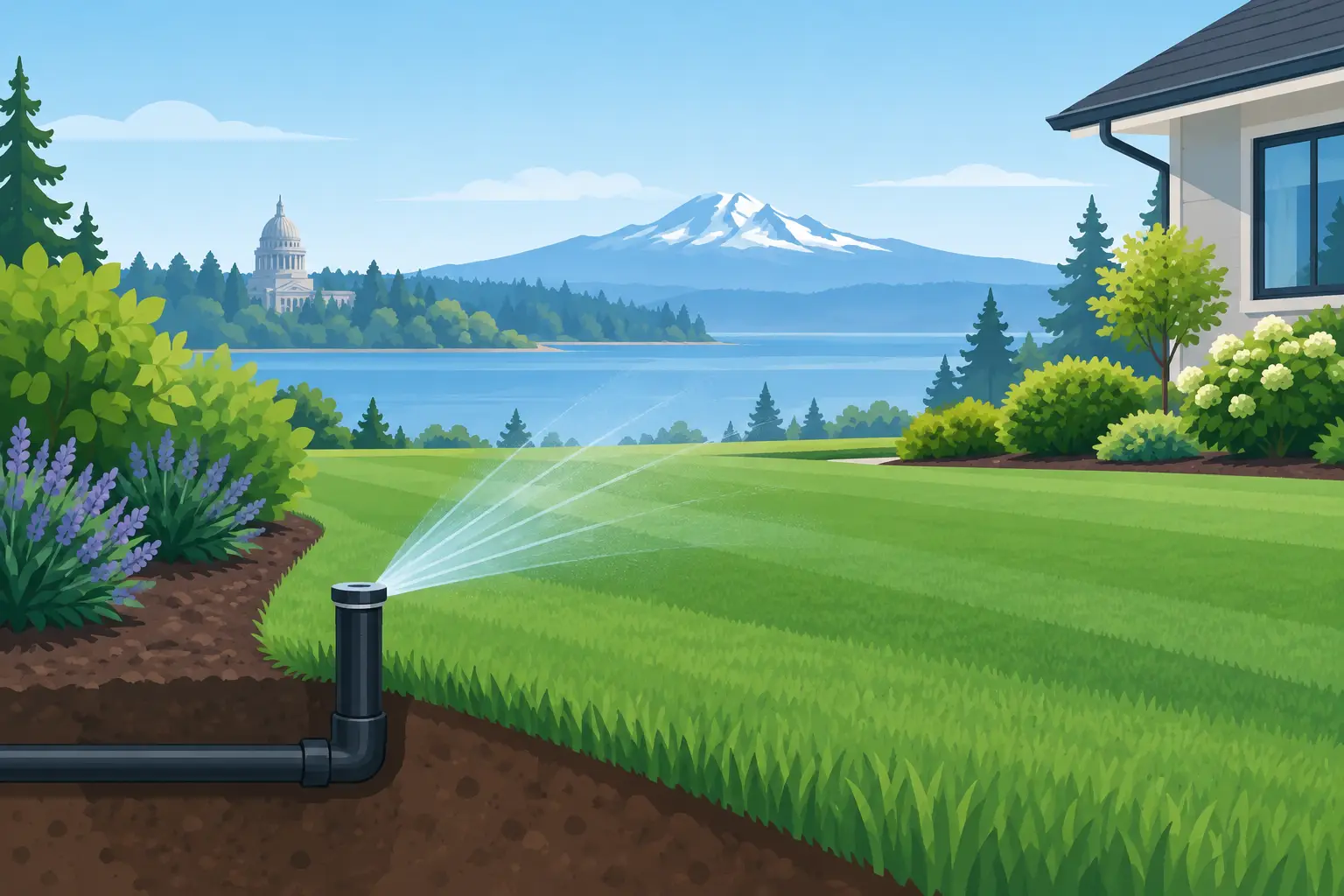
A lawn can look green through much of an Olympia winter without any help from a sprinkler. The real test comes when summer rain tapers off, new plantings need consistent moisture, and hand watering turns into another evening chore. Professional irrigation system installation Olympia WA gives your landscape water where it needs it, when it needs it, without wasting time or creating wet spots around the property.
A good system is more than a few sprinkler heads connected to a timer. It should match the property’s water pressure, soil, slopes, plant types, sun exposure, and future landscape plans. That is what separates a system that supports the yard from one that creates runoff, dry patches, or constant repair calls.
Start With the Property, Not the Equipment
Every irrigation project should begin with a site review. Olympia-area properties can vary widely, even within the same neighborhood. One yard may have compacted soil and full afternoon sun, while the next has shaded beds, mature trees, steep grades, and drainage concerns. Using the same layout for both would lead to uneven results.
The first step is identifying what needs water and how much. Turf, shrubs, perennials, vegetable gardens, new trees, and container areas do not all belong on the same watering schedule. Lawn areas generally need broader coverage, while planted beds often benefit from lower-volume drip irrigation that delivers water closer to the root zone.
The condition of the site matters just as much. Before installation, a contractor should look at the existing grade, retaining walls, patios, utility locations, hose connections, drainage routes, and access points. If a yard will eventually receive new pavers, a deck, a retaining wall, or expanded planting beds, it makes sense to plan irrigation alongside that work rather than install it first and move it later.
Irrigation System Installation Olympia WA: What a Good Plan Includes
A professionally planned system is designed in zones. Each zone serves an area with similar watering requirements. Separating lawn from flower beds, sunny areas from shaded areas, and established plants from new landscaping gives the controller a better chance of applying the right amount of water.
Water pressure and flow capacity also determine the design. Too many heads operating at once can reduce coverage and leave parts of the lawn dry. A properly sized layout divides the property into workable zones so each head performs as intended. This is a practical detail that affects everything from plant health to monthly water use.
A complete plan commonly accounts for the following:
- Water source capacity, pressure, and backflow protection requirements
- Zone placement for lawns, gardens, trees, slopes, and shade areas
- Pipe routing that avoids hardscape features, utilities, and future construction
- Sprinkler or drip components suited to the planting area
- Controller settings that can be adjusted as seasons and weather change
The equipment choice depends on the landscape. Pop-up spray heads can work well for smaller lawn areas, while rotary heads may be better suited to larger turf zones. Drip lines and emitters are often the right choice for beds, shrubs, and trees because they reduce overspray onto siding, walkways, and patios.
Build for Olympia Weather, Not a Fixed Calendar
Western Washington has wet winters and relatively dry summers, which makes seasonal adjustment essential. A timer set to run the same schedule in April and August can overwater in spring and underperform during extended summer dry spells.
A controller should be easy to adjust, whether it is a standard programmable model or a weather-aware controller. The goal is not to water every day by default. It is to water deeply enough to support healthy roots, then allow the soil to absorb and hold that moisture. The right frequency depends on soil type, sun, plant maturity, and recent weather.
New landscaping needs special attention. Fresh sod, young trees, and recently planted shrubs usually require a more frequent schedule at first. Once roots become established, the schedule should be reduced and adjusted. Keeping a new landscape on a high-frequency watering program for too long can encourage shallow roots and create unnecessary water use.
Drainage also deserves attention. Olympia’s rainy season can expose low areas, compacted soil, and poor grading. Irrigation will not fix standing water caused by a drainage problem. In some cases, the best approach is to correct grading, add drainage improvements, or revise planting areas before installing sprinklers. Water should support the landscape, not add to an existing site issue.
Coordinate Irrigation With Landscape Construction
Irrigation is easiest to install before a finished landscape is in place. Trenching through a completed lawn, new planting bed, or paved patio is possible, but it adds disruption and can increase the cost of the project.
For a larger yard renovation, irrigation should be considered early in the process. The sequence often starts with site clearing, grading, drainage, or retaining work. Irrigation lines can then be installed before sod, mulch, plants, concrete, or pavers are finished. This creates a cleaner result and helps protect the investment in the completed landscape.
This coordination is especially useful for properties that need several improvements at once. A homeowner may be replacing an aging lawn, adding a patio, removing stumps, rebuilding a slope with a retaining wall, and installing planting beds. Working with one contractor that can organize these connected tasks helps prevent conflicts between trades and reduces the chance of redoing finished work.
Sunrise Landscaping LLC approaches outdoor projects with this whole-property view. Irrigation can be planned alongside landscape design, garden installation, hardscapes, drainage-related grading, and other site improvements so the finished space works as one system.
Common Problems to Avoid
The most common irrigation issues are usually design or installation problems, not complicated mechanical failures. Heads installed too close to walls may spray siding or fences. Heads placed too far apart may leave dry strips of lawn. Mixed plant types on one zone can force a compromise that works for none of them.
Another problem is watering on slopes too quickly. When the ground cannot absorb water at the same rate it is applied, runoff carries water away before it reaches the roots. Shorter run times with soak periods between cycles can help, but the layout and nozzle selection must support that strategy.
Buried components also need to remain accessible where service is expected. Valves, controllers, and backflow devices should not be hidden behind permanent structures or dense plantings. A system is easier to maintain when seasonal adjustments and repairs do not require disturbing the landscape.
Property owners should also avoid treating an irrigation system as fully automatic forever. Even a well-designed system needs occasional checks. A damaged head, clogged drip emitter, broken fitting, or shifted nozzle can waste water or leave an area dry without being obvious from the house.
What to Expect During Installation
The installation process begins with a clear layout and estimate based on the property’s needs. Once the plan is approved, crews mark the work areas, locate utilities as required, trench for lines, install valves and components, connect the controller, and test each zone.
Some disruption to lawn and planting areas is normal, but careful routing and restoration make a major difference. After the system is tested, sprinkler heads are adjusted for coverage and drip areas are checked for proper flow. The final walkthrough should include an explanation of zone schedules, controller use, seasonal adjustments, and basic maintenance.
The right installation is not necessarily the largest system or the one with the most features. A small yard with established landscaping may need a straightforward design with a few well-planned zones. A large commercial property or a newly developed residential site may need a more detailed approach with multiple irrigation methods and phased construction. The right answer depends on the site and the plans for the property.
A well-planned irrigation system protects the time and money invested in your lawn, trees, gardens, and outdoor construction. Before the dry season arrives, an on-site estimate can help turn a patchwork watering routine into a practical system built for your Olympia property.