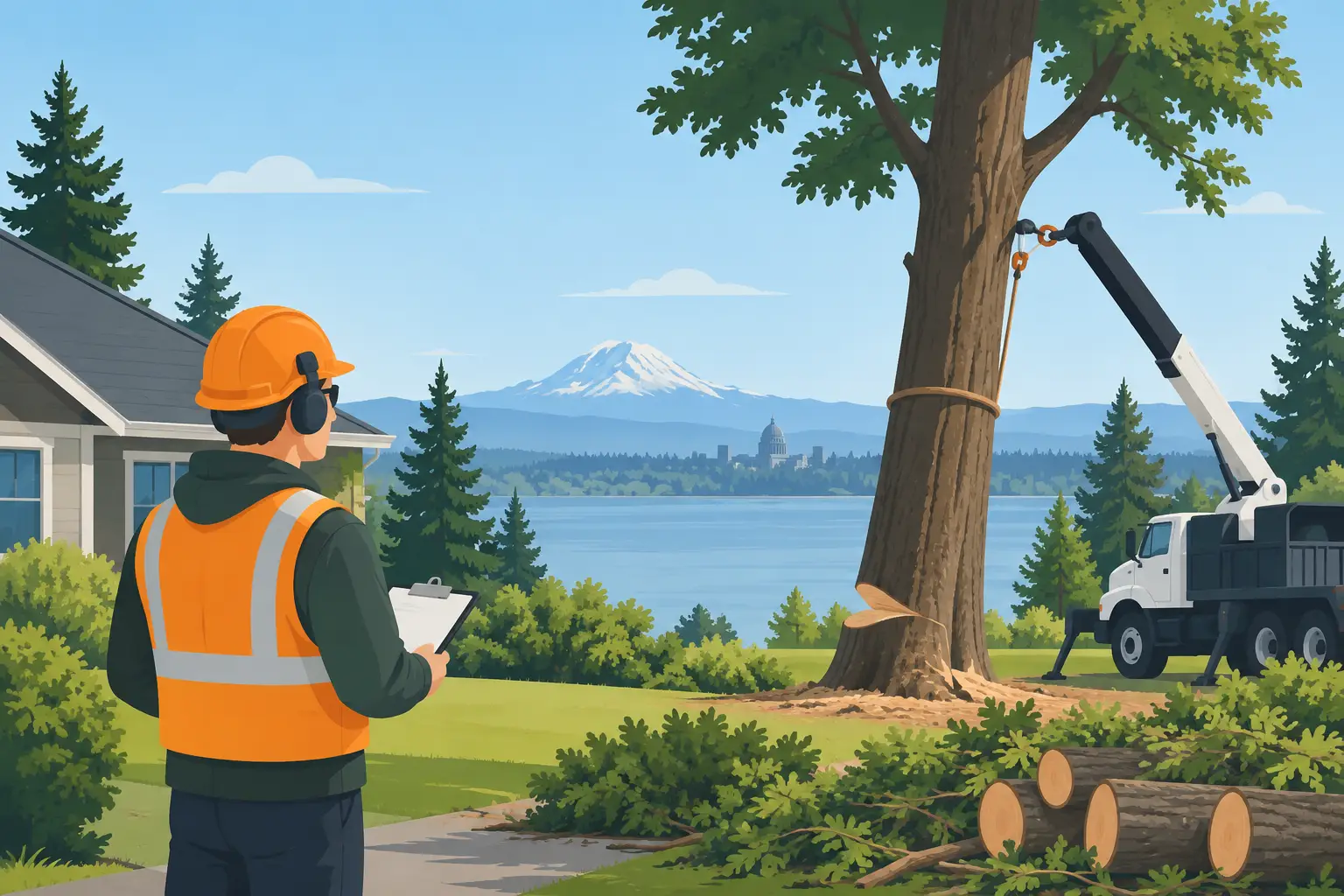
A tree can look stable from the street while creating a real problem on the ground. Roots may be lifting a driveway, low limbs may be hanging over a roof, or a leaning trunk may be too close to a fence, utility line, or neighboring property. When removal is the right call, a little preparation helps the work move safely and keeps the rest of your landscape from becoming an afterthought.
To prepare for tree removal, start by looking beyond the tree itself. Access, underground utilities, nearby structures, wet soil conditions, and the plan for the stump all affect how the job should be handled. For Olympia-area homeowners and property managers, planning around seasonal rain and tight residential lots is especially useful.
Start With a Clear Scope for the Tree
Before scheduling work, identify what needs to be removed and why. The answer may seem obvious when a tree is dead or badly damaged, but it can be less clear with a crowded evergreen, a tree shading a garden, or roots affecting hardscape. Take note of whether the concern is safety, building clearance, drainage, future construction, visibility, or ongoing maintenance.
Walk the area and look at what sits beneath and around the canopy. A tree close to a home, garage, fence, retaining wall, patio, or overhead service line requires a more controlled removal approach than a tree in an open yard. Let the contractor know about any suspected decay, storm damage, leaning, visible root issues, or branches that have already fallen. Photos can be helpful when requesting an estimate, but an on-site review provides the clearest picture.
Be specific about the result you want. Do you need the tree cut down only, or should the crew remove debris, grind the stump, haul away chips, and leave the area ready for a new landscape feature? A clear scope prevents the common problem of finishing tree removal only to realize a large stump or uneven patch of ground still blocks the next phase of the project.
Check Access Before Tree Removal Begins
Access is one of the first practical details to solve. Tree crews need a safe route for people, equipment, and debris removal. In a typical Olympia neighborhood, that route may be a driveway, side yard, gate, or shared access area. Narrow spaces do not automatically prevent removal, but they may change the equipment and method used.
Measure gates and side-yard openings if equipment may need to pass through them. Move vehicles from the driveway and street frontage if those spaces could be needed for staging. If your property has a locked gate, provide access arrangements before the scheduled date rather than leaving the crew waiting at the curb.
Also consider the ground conditions. Puget Sound rain can leave lawns and planting beds soft, especially in fall, winter, and early spring. Equipment can leave marks on a wet lawn, and protecting a finished garden may require a different access route or ground protection. There is a trade-off here: the shortest path to the tree is not always the best path for a carefully maintained yard.
If the removal involves a commercial property, plan for customer and employee circulation as well. Mark loading areas, parking stalls, delivery routes, and pedestrian entrances that must stay clear. A short conversation before work begins can help avoid conflicts with daily operations.
Protect the Areas You Want to Keep
Tree removal is controlled work, but preparation around the work zone matters. Remove patio furniture, grills, planters, children’s play equipment, outdoor décor, and movable items from beneath the canopy and along the access route. Close windows near the work area and bring pets indoors.
For valuable planting beds, irrigation components, landscape lighting, or water features, point them out during the estimate and again before work begins. Small items can be easy to miss under mulch, leaves, or overgrown shrubs. Marking a location is often better than assuming it will be visible from a distance.
You should also think about fencing and hardscape. A fence panel may need temporary removal to create access. Pavers, concrete edges, and retaining walls may be close enough that the crew needs to adjust how sections of the tree are lowered. This is where working with a contractor that understands both tree and landscape construction can be useful. The removal plan should respect the property features you have already invested in.
Locate Utilities and Identify Overhead Hazards
Never assume the ground is clear because there are no visible lines. Before stump grinding, excavation, fence work, or new planting begins, underground utility locations need to be addressed. Water, gas, electric, communications, sewer, and irrigation lines can run through areas that look like simple lawn or planting space.
Call 811 before digging-related work and allow time for utility marking. Private lines, such as irrigation piping, landscape wiring, or some service connections, may not be included in public utility markings. If you know where those private systems run, share that information with your contractor.
Overhead conditions matter just as much. Branches touching or near power lines are not a do-it-yourself trimming project. Tell the contractor about every overhead line you see, including service lines running from a utility pole to the house. If utility coordination is required, it may affect scheduling, so do not wait until the morning of removal to raise the issue.
Plan for Neighbors, Parking, and Noise
A tree removal project is temporary, but it can affect the people around you. Give close neighbors a heads-up if the work will happen near a shared fence, property line, or street. This is particularly considerate when equipment, trucks, and saws will be operating near their driveway or when branches extend over their side of the fence.
Ask neighbors to keep vehicles clear of the work zone if street access is needed. Avoid making promises about exact completion times, since weather, tree condition, and utility issues can change the pace of a job. A simple notice that professional tree work is scheduled is usually enough.
If a homeowners association, commercial site manager, or property owner has rules about parking, contractor access, or work hours, confirm those requirements ahead of time. Some properties also require approval before removing certain trees. Local requirements can vary by location and project, so verify whether permits or other approvals apply to your property before work is scheduled.
Decide What Happens to the Stump
Leaving a stump can be the right choice in some areas, but it is worth deciding deliberately. A stump may be out of sight in a wooded edge of a larger property. In a front yard, lawn, future patio area, or new garden bed, it is often an obstacle that continues to affect how the space can be used.
Stump grinding removes the visible stump and reduces the remaining wood below grade, making the area easier to cover with soil, lawn, or planting. The process creates wood chips, and you should discuss whether those chips will stay on site, be spread in a designated area, or be hauled away. If you plan to install pavers, concrete, a retaining wall, or a deck where the tree stood, share that plan early. The site may need additional excavation, compaction, drainage work, or grading after the stump is addressed.
Do not assume you can plant a replacement tree in the exact same spot immediately. Old roots, remaining wood, soil settlement, and the new tree’s future size all need consideration. Moving the new planting a few feet may create a healthier long-term result and avoid conflicts with a driveway, foundation, or utility route.
Use the Removal as a Site-Improvement Opportunity
Removing one large tree can change a yard quickly. It may bring more sunlight to a shaded lawn, expose an aging fence, reveal drainage problems, or open a view into a neighboring property. That change is not necessarily bad, but it should shape the plan for what comes next.
Consider whether the open area needs new planting, erosion control, fresh lawn, irrigation adjustments, a privacy screen, or a hardscape feature. More sunlight can support a different mix of plants, while the loss of a tree canopy can make a patio or entry feel more exposed. If the tree was holding soil on a slope, the site may need a retaining or drainage solution rather than a simple layer of grass seed.
Sunrise Landscaping LLC can coordinate tree and stump removal with grading, planting, irrigation, pavers, retaining walls, and other outdoor improvements, helping property owners avoid the delay of bringing in separate contractors for each stage.
A Simple Day-of Preparation Check
On the morning of the work, make sure vehicles, outdoor belongings, and pets are out of the work area. Keep gates unlocked or provide the agreed access instructions. Confirm the crew knows about marked utilities, irrigation lines, fragile landscape features, and any concern that came up after the estimate.
Then give the crew room to work. Tree removal requires attention to changing conditions, and keeping children, pets, residents, and visitors outside the designated work zone protects everyone. Once the tree is down and the area is cleared, walk the site with the contractor if possible so you understand what was completed and what the next step should be.
A removed tree leaves more than open space. It gives you a chance to make that part of the property safer, easier to maintain, and better suited to the way you want to use it next.