Olympia backyards have to handle more than summer barbecues. They need to stand up to long wet seasons, shaded corners, soft soil, changing grades, and the daily traffic of kids, pets, guests, and garden equipment. A backyard renovation Olympia property owners can enjoy for years starts by solving those site conditions before selecting finishes.
A new patio or fresh lawn can make an immediate difference, but appearance alone does not fix standing water, a failing slope, poor access, or a yard that does not match how your household uses it. The best results come from a coordinated plan that connects drainage, hardscape, planting, irrigation, and construction work in the right order.
Start With How the Yard Needs to Work
Before choosing pavers, a deck, or a planting style, identify what is not working now. Some yards have plenty of square footage but no usable gathering area. Others have an aging concrete pad, a steep transition from the house to the lawn, or a muddy path to a shed, gate, or parking area.
Think about the practical uses first. You may want a level dining patio close to the kitchen, a durable route for moving trash bins, a play area with clear sight lines, more privacy from neighboring homes, or garden beds that are easier to maintain. Commercial properties may need safer walkways, better access, curb appeal, and landscaping that does not demand constant attention.
A good site review also looks at sun exposure, mature trees, existing utilities, drainage routes, and the condition of surrounding fences or structures. These details affect where outdoor features belong and what construction method makes sense. Moving a patio ten feet can mean less excavation, better afternoon shade, or a more direct route from the home.
Address Drainage and Grading Before Surface Work
Water management is one of the most important parts of a backyard renovation in Olympia. Our wet weather can expose problems quickly. Water that collects against a foundation, pools on a patio, or turns a lawn into mud needs attention before decorative improvements go in.
Grade the Site for Positive Drainage
A finished yard should guide water away from buildings and avoid trapping runoff in low areas. Depending on the property, that may require regrading soil, building a swale, adding drainage collection, or creating a retaining solution that manages elevation changes. The right approach depends on where the water starts, where it can safely go, and what is already built around the yard.
Retaining walls are useful when a slope prevents level outdoor space or when soil needs to be held in place. They can create separate terraces for a patio, lawn, or planting area. They are not simply decorative blocks. Proper base preparation, drainage behind the wall, and sound construction determine whether the wall performs over time.
Build Patios on a Proper Base
Pavers, concrete, and other hardscape materials need a stable, well-prepared base. Without it, surfaces can settle, shift, or hold water. Excavation, compacted aggregate, edge restraint, and correct slope are the work behind a patio that looks clean and stays functional.
Pavers are a strong choice for many Olympia homes because they offer design flexibility and can suit patios, walkways, fire pit areas, and driveway extensions. Concrete can be the right fit when a clean, continuous surface is preferred. Material choice matters, but installation quality and site preparation matter just as much.
Create Outdoor Areas With a Clear Purpose
A backyard does not need every possible feature. It needs the features that improve the way you use the property. Start with the primary destination, then connect it to the rest of the yard.
For many households, the main destination is a patio or deck located near the home. This makes serving meals, carrying supplies, and keeping an eye on children easier. If the yard is large, a second destination can add value: a quiet seating area, fire feature, garden space, or water feature placed farther from the house.
Paths are often overlooked until a rainy day makes the need obvious. A defined walkway protects lawn and planting beds while making the yard easier to use year-round. It can connect a back door to a gate, shed, detached garage, patio, or garden without creating a worn dirt track.
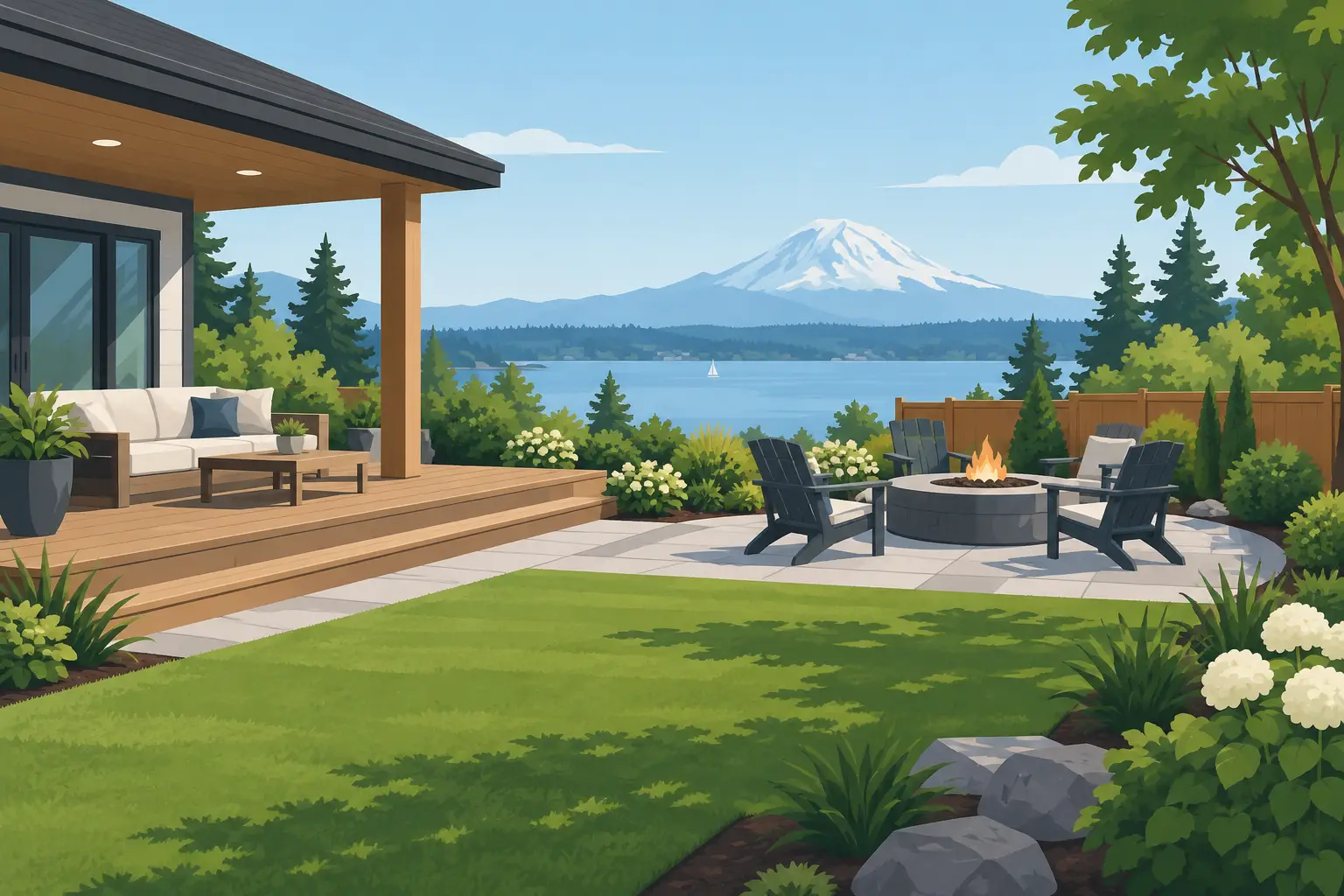
Decks work especially well where the ground drops away from the home or where a raised outdoor living area offers a better view. Patios are generally a natural fit for level or newly graded areas. In some renovations, the strongest result is a combination: a deck at the house, steps down to a paver patio, and landscaping that softens the transition.
Choose Planting That Fits Olympia Conditions
Plants should support the renovation, not create a new maintenance problem. The right mix depends on drainage, shade, soil, desired privacy, and how much ongoing care the property owner wants to handle.
Evergreen structure can provide privacy and winter interest, while perennials and flowering shrubs bring seasonal color. Native and climate-appropriate plants can reduce the struggle of keeping unsuitable material alive. In heavily shaded yards, it is often better to work with the shade than repeatedly reseed grass that will not thrive.
Irrigation should be planned alongside new planting and lawn areas. A well-designed system helps establish new material and provides consistent coverage without dragging hoses across a finished patio. It also allows separate zones for lawns, garden beds, and areas with different water needs.
Do not overlook the condition of existing trees. A large tree may be an asset, but dead limbs, hazardous trunks, invasive roots, or an old stump can limit the layout and create safety concerns. Tree and stump removal may be necessary to prepare the site for construction, improve access, or open up a planting area. It should happen before final grading and installation whenever possible.
Plan the Work in the Right Sequence
Backyard projects often become more expensive when work is performed out of order. Installing a new lawn before a retaining wall, or building a patio before resolving drainage, can lead to rework and damaged finished surfaces.
A practical construction sequence begins with clearing and site preparation. This may include tree removal, stump grinding, demolition of old concrete, or removal of overgrown plant material. Next comes grading, drainage, retaining walls, and other structural work. Hardscapes, decks, and concrete installation follow once the base work is complete. Planting, irrigation adjustments, mulch, and finishing details come near the end.
This sequence also makes it easier to coordinate the project as one connected job instead of hiring separate crews who may not account for each other’s work. Sunrise Landscaping LLC provides landscape design, hardscapes, retaining walls, irrigation, tree and stump removal, and general exterior construction so property owners can move from an estimate to a completed outdoor space with one local contractor.
Set a Budget Around Priorities, Not Just Materials
A renovation budget should account for the conditions below the surface. A less expensive patio material will not make up for inadequate base preparation. Likewise, an attractive planting plan will struggle if drainage, soil quality, or irrigation is ignored.
If the full vision needs to be completed in phases, start with the permanent work that supports everything else: drainage, grading, retaining, utility planning, and primary access. A patio can be expanded later, and planting can fill in over time. Rebuilding a failed wall or removing newly installed pavers to correct water flow is far more disruptive.
During the estimate process, be clear about your priorities. Tell the contractor whether you value low maintenance, entertaining space, privacy, pet use, parking access, or a long-term plan for the entire property. Those details help guide decisions that fit both the site and the budget.
A well-planned backyard should make the property easier to live with in every season. Start with the problems underfoot, build the spaces you will actually use, and choose materials and planting that suit Olympia weather. The result is not just a better-looking yard, but a more useful part of your property every day.