A patio can look finished on day one and still become a problem within a few wet seasons if the base, drainage, and material are wrong for the site. When comparing pavers versus poured concrete, Olympia property owners should look beyond the initial appearance. The best choice depends on how the space will be used, the condition of the soil, water movement across the property, access for equipment, and how easily you want to handle future repairs.
Both materials can create clean, durable patios, walkways, driveways, and outdoor gathering areas. Both also depend on professional site preparation. A well-built hardscape starts with excavation, a compacted base, proper slope, and a plan for directing water away from the home. Material matters, but the work underneath it often determines how the finished surface performs.
Pavers Versus Poured Concrete: The Main Difference
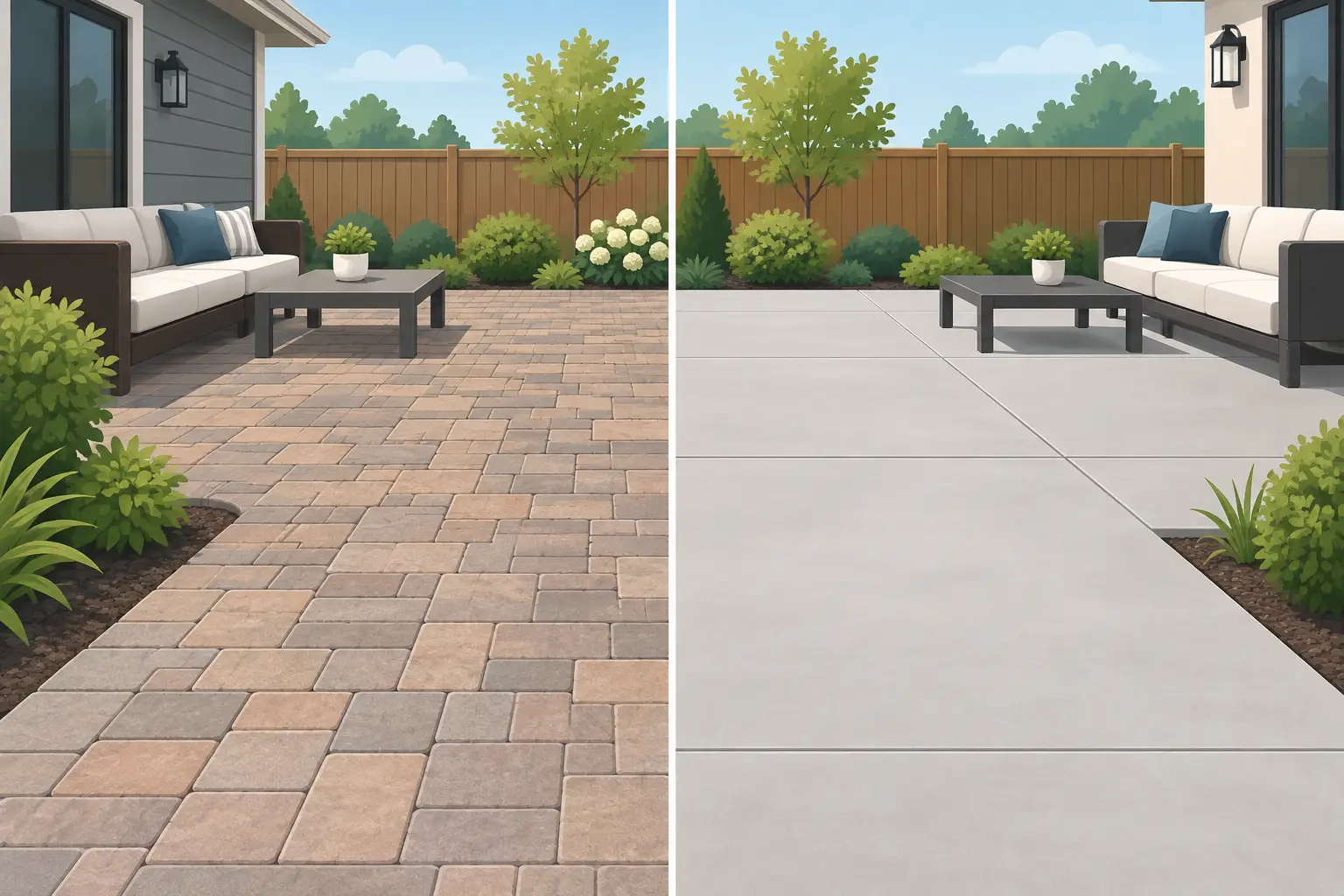
Pavers are individual units, usually made from concrete, that are installed over a prepared gravel base and bedding layer. The joints between the units are filled with sand or joint material. This system has flexibility, which can be useful when the ground shifts slightly over time.
Poured concrete is placed as a continuous slab. It is formed, reinforced as needed, finished, and cut with control joints designed to guide cracking. A concrete surface can be smooth, broom-finished, stamped, colored, or exposed aggregate, depending on the look and traction needed.
Neither option is automatically better. A simple backyard path may be a good candidate for poured concrete, while a large patio with curves, borders, steps, and multiple elevations may benefit from the design flexibility of pavers. The right answer should fit the property rather than follow a one-size-fits-all rule.
Appearance and Design Flexibility
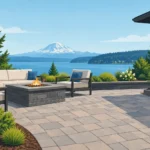
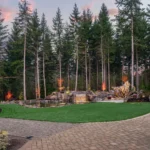
Pavers offer more pattern and color options. They can be installed in running bond, herringbone, basketweave, or other layouts, with contrasting borders that define a patio or driveway. They work especially well when a hardscape needs to connect with retaining walls, garden beds, fire features, or a landscape design that has several distinct areas.
Because pavers are modular, they are also useful around curved edges and irregular spaces. A patio can follow the shape of a garden, wrap around a water feature, or transition into a walkway without the broad, uninterrupted look of a slab.
Concrete creates a more continuous surface. That can be a benefit for modern designs, accessible paths, sport courts, utility areas, and patios where a clean, open appearance is the goal. Decorative finishes can add character, but stamped concrete should be selected carefully. A heavily textured finish may not match every home, and surface coatings can require maintenance as they age.
For either material, color should work with the house, roof, fencing, and existing outdoor structures. Dark surfaces can show pollen, dust, and moss more readily in the Puget Sound climate. Very light surfaces can show stains. A practical middle tone often gives homeowners the easiest long-term upkeep.
Rain, Drainage, and Olympia Soil Conditions
Western Washington rain makes drainage a construction issue, not an afterthought. Water should not drain toward the foundation, collect at a patio edge, or wash out soil near a walkway. A surface needs enough slope to shed water while still feeling comfortable underfoot.
Pavers allow water to move through the joints and into the prepared base below. That does not mean every paver installation is fully permeable or that water can be ignored. The base still needs to be designed for the site, and runoff may need to be directed to a suitable drainage area. In locations with standing water or poorly draining soil, the excavation and base plan become even more important.
Concrete sheds water across its surface, so correct slope and drainage details are essential. If water is trapped beside a slab, it can contribute to settlement, staining, moss growth, and moisture problems near the structure. Downspouts, roof runoff, and nearby grades should be evaluated before the concrete is poured.
Tree roots are another local consideration. Roots can lift either material. With pavers, a damaged section can often be removed, the base corrected, and the units reset. With concrete, root-related movement may require slab replacement or a more visible repair. When mature trees are close to a proposed hardscape, it is worth planning the layout around root zones rather than forcing a surface where it will be under constant pressure.
Durability and Cracking
Concrete is strong and durable, but every slab has the potential to crack. Control joints help manage where cracks occur, but they do not guarantee a crack-free surface. Small cracks may be largely cosmetic. Wider cracks, uneven sections, or cracks caused by poor base preparation can become a safety and drainage concern.
Pavers do not crack as one large surface because they are separate units. They can, however, settle, spread at the edges, or develop low spots if the base is inadequate. Proper edge restraint and compaction are critical. A paver patio is only as stable as the material beneath it.
For vehicle traffic, both materials need to be designed for the load. A driveway is not simply a patio with cars on it. It requires appropriate excavation depth, base thickness, compaction, and material selection. Heavy trucks, trailers, RVs, and frequent commercial traffic may call for a different approach than a standard residential driveway.
Maintenance and Repairs
Paver maintenance usually includes occasional sweeping, refilling joint sand where needed, managing weeds at edges, and cleaning moss or algae in shaded areas. Sealing is optional for many projects, although it can deepen color and help resist stains. If a paver becomes damaged or a utility line needs access, individual sections can be lifted and replaced without removing the entire surface.
Concrete maintenance is generally straightforward: keep it clean, avoid harsh de-icing products, and seal it when the selected finish calls for it. Small cracks may be sealed to limit water entry. Repairs can be effective, but color and texture matching is not always perfect, especially on decorative concrete. Replacing one portion of a slab may leave a visible difference between old and new work.
This repair factor often matters more than homeowners expect. If your property has irrigation lines, drainage improvements, electrical runs for lighting, or future outdoor upgrades planned beneath the surface, pavers can provide easier access later. Concrete may make more sense when the area is unlikely to be disturbed and a continuous surface is preferred.
Cost: Look at the Whole Project
Poured concrete often has a lower upfront cost for a simple, rectangular area with good access and minimal site work. It can be an efficient choice for straightforward walkways, small pads, and basic patios. Decorative finishes, complex forms, demolition, limited access, drainage work, and reinforcement can increase the price quickly.
Pavers often cost more initially because of the installation labor, base preparation, cutting, edging, and pattern work. However, their repairability and design range can add long-term value, particularly for a prominent patio, entry, or outdoor living space.
The estimate should account for more than square footage. Existing concrete removal, slopes, drainage corrections, retaining needs, access limitations, tree roots, and connections to steps or structures can change the scope. A low price that skips base preparation is not a savings if the finished surface settles after the first few seasons.
When Pavers Are Usually the Better Fit
Pavers are often a strong choice for outdoor living areas where appearance, detail, and future flexibility matter. Consider them for patios that include seating walls, fire pits, outdoor kitchens, garden borders, or changes in elevation. They also work well where a homeowner wants a surface that can be selectively repaired after settlement, utility work, or root disturbance.
They are particularly practical when the project will be part of a larger landscape plan. Pavers can tie together a front entry, side yard path, backyard patio, retaining wall, and planting areas without making the property feel like it is covered in one large slab.
When Poured Concrete Is Usually the Better Fit
Poured concrete is often the practical choice for simple utility surfaces and clean, continuous paths. It can be a good fit for a straightforward patio, garbage-can pad, equipment pad, side-yard walkway, or accessible route where smooth travel is the priority.
Concrete may also make sense when the budget is focused on a large area with a simple layout. The key is not to treat it as a quick pour. Proper grading, sub-base preparation, reinforcement decisions, joint placement, and finishing all affect the result.
Start With the Site, Not the Material
Before selecting a color or pattern, look at where water goes during a hard rain, how the yard slopes, where roots are located, and how the space will be used five years from now. A patio that will eventually connect to a deck, retaining wall, irrigation update, or new garden should be planned as part of the full property, not as an isolated square of hardscape.
Sunrise Landscaping LLC helps Olympia-area property owners evaluate these connected details, from landscape design and drainage considerations to hardscape construction and finishing work. A clear on-site estimate can identify the material and preparation method that make sense for your property.
The best surface is the one that stays level, drains correctly, fits the way you use the yard, and still looks right after years of Northwest weather. Start with a realistic plan for the ground beneath it, then choose the finish that makes your outdoor space more useful every day.