
A patio can look finished on installation day and still become a problem after its first Puget Sound winter. Standing water, shifting edges, mossy surfaces, and low spots usually come back to decisions made before the pavers were installed: the material, the layout, the drainage plan, and especially the base underneath.
Knowing how to choose patio pavers means looking beyond color samples. The right paver needs to fit how you use the space, work with your home and landscape, handle Olympia-area rain, and make sense for the site conditions. A small seating area outside a level back door has different needs than a large dining patio on a sloped yard with clay soil.
Start With How the Patio Will Be Used
The first decision is not whether you prefer gray, tan, or blended colors. It is what the patio needs to do. A quiet area for two chairs can use smaller-format pavers and a simpler layout. A patio built for outdoor dining, a fire feature, or frequent gatherings needs a larger footprint, comfortable walking paths, and a surface that stays stable under tables and chairs.
Think about traffic as well. A patio that connects the driveway to a side gate, or the house to a backyard entry, may receive muddy boots, rolling bins, and daily foot traffic. That calls for a durable material, a pattern with good interlock, and a design that does not create trip points at thresholds or transitions.
Also consider the furniture before choosing a paver size. Very small pavers can create a busy look under a large dining set. Oversized slabs can look out of scale in a narrow courtyard. Chair legs and grill wheels perform best on a consistently flat surface with tight, well-finished joints.
Choose a Material That Fits the Property
Most residential patios in this area use concrete pavers, natural stone, or porcelain pavers. Each can create a strong finished result, but each has different costs, maintenance needs, and installation requirements.
Concrete pavers offer the most flexibility
Concrete pavers are a practical choice for many Olympia homes because they come in a broad range of shapes, colors, textures, and price points. They can suit a traditional home, a modern landscape, or a rustic backyard project. Individual units are also easier to repair than a poured surface if future site work, settling, or utility access becomes necessary.
Look for pavers rated for exterior use and choose a surface texture that provides traction when wet. Smooth pavers can look clean and contemporary, but a patio that stays shaded through winter may benefit from more texture. Color also matters. Very light pavers can show mud and leaf stains, while very dark colors may show dust, pollen, and hard-water marks more easily.
Natural stone brings variation, with added planning
Natural stone gives a patio a more organic appearance, and no two pieces are exactly alike. Flagstone, bluestone, and similar materials can work well around gardens, water features, and established landscapes where a formal grid would feel out of place.
The trade-off is that stone varies in thickness, shape, and color. Installation can take more fitting and grading work, and some stones require more attention to prevent staining or surface deterioration. Irregular flagstone is not always the best choice for a patio that needs to accommodate mobility equipment, wheeled furniture, or frequent dining use.
Porcelain pavers provide a clean, modern surface
Exterior-rated porcelain pavers are low-absorption and available in finishes that resemble stone, concrete, or wood. They are often chosen for contemporary designs and for homeowners who want consistent color and clean lines.
They must be installed with the correct system for the product and site. Porcelain is not a material to place over an underprepared base and hope for the best. It may also cost more than standard concrete pavers, so it is worth deciding whether its appearance and maintenance benefits justify the added investment.
Put Drainage Ahead of Pattern and Color
In the Puget Sound region, drainage is part of patio design, not an optional upgrade. Rain needs a planned path away from the house, away from doors, and away from areas where it can soften soil or collect against a retaining wall.
A patio should have a controlled slope so water moves off the surface without making the space feel noticeably tilted. The direction of that slope depends on the house, existing grades, downspouts, yard layout, and nearby structures. Sometimes the solution is as simple as directing water toward a planted area. Other sites need swales, drainage rock, catch basins, or a more complete drainage plan.
Permeable pavers can be worth considering where runoff is a concern. Their wider joints and open-graded base allow water to move through the patio rather than sheet across the surface. They are not right for every project, though. They need proper base construction and periodic cleaning so joints do not become clogged with sediment.
Do not choose a patio location based only on the flattest-looking patch of lawn. A low area may appear convenient but can become saturated during winter. If the yard has a slope, retaining needs, or evidence of poor drainage, solve those conditions as part of the overall project rather than treating the patio as a separate surface.
The Base Determines Whether Pavers Stay Level
Pavers are only as reliable as the structure beneath them. A well-built patio typically includes excavation, proper grading, compacted base material, bedding material, edge restraint, joint sand, and final compaction. The exact depth and approach depend on soil conditions, the intended use, drainage needs, and whether the project includes steps, walls, or adjacent concrete.
This is where shortcuts cause expensive results. Installing pavers directly over soil, placing a thin layer of gravel without compaction, or using loose edging may look acceptable at first. Over time, wet ground and seasonal movement can lead to settling, spreading joints, and uneven areas.
A patio next to the home also needs careful attention at the foundation and door elevations. Raising the finished grade too high can interfere with drainage, siding clearance, or door operation. A contractor should evaluate those details before materials are ordered, not after the patio reaches the doorway.
Select a Size and Pattern That Work Together
Paver size affects both appearance and installation. Large-format pavers create fewer joint lines and can make a compact patio feel more open. They also require a very even base because slight inconsistencies are more visible across larger pieces. Smaller pavers are more forgiving around curves, borders, and irregular spaces, but they add more joints and visual movement.
For patterns, choose function before novelty. Running bond and simple linear layouts suit clean, modern spaces. Herringbone provides strong interlock and is a dependable choice for high-traffic areas. Random modular patterns can soften a broad patio and work well with traditional homes, provided the layout is planned to avoid narrow cut pieces at the edges.
A contrasting border can define the patio and help tie the surface to a retaining wall, steps, or garden beds. It is most effective when it has a purpose – framing an edge, marking a change in elevation, or connecting colors already present on the home. Too many colors, borders, and patterns can make a modest patio feel crowded.
Match the Pavers to the Home and Landscape
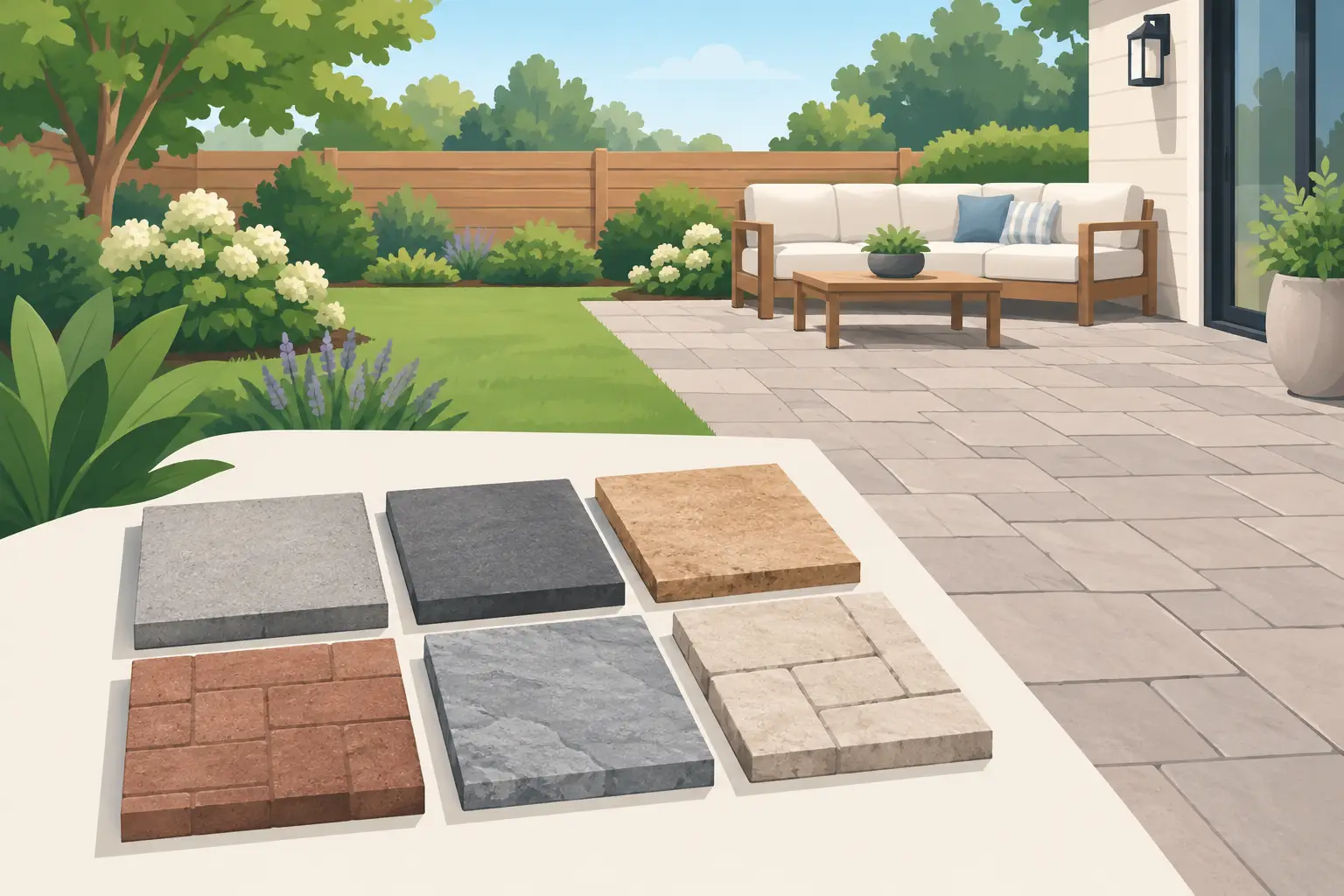
Bring samples outside before making a final selection. Pavers can look very different in direct sun, under evergreen shade, and when wet. In western Washington, the wet appearance matters because it is what you will see for much of the year.
Use the house as a starting point. Warm earth tones often complement cedar, brick, and traditional siding. Charcoal, gray, and light concrete tones work naturally with modern exteriors and black window trim. A blended paver can be helpful when the property already has several materials, such as wood fencing, stone veneer, and mature planting beds.
Consider maintenance in the same conversation. Deep shade, nearby trees, and north-facing locations encourage moss and organic buildup. A textured, mid-tone paver can be more forgiving than a pale, smooth surface in those conditions. Good drainage and adequate sunlight will still matter more than the paver color alone.
Set a Budget for the Full Project, Not Just the Pavers
Paver cost is only one part of a patio budget. Site access, excavation, haul-off, base depth, drainage improvements, steps, edging, curves, and demolition of an old patio can all affect the final scope. A straightforward rectangular patio on accessible, level ground is usually less involved than a patio that requires grade changes, retaining work, or hand-carrying materials into a fenced backyard.
It can be tempting to choose a lower-cost paver to stretch the budget. That can be reasonable if the base preparation and drainage are still handled correctly. It is usually a mistake to reduce the structural work below what the site needs just to afford a more expensive surface material. A dependable concrete paver on a properly prepared base will outperform a premium product installed over inadequate groundwork.
Ask for an estimate that identifies the site preparation, drainage approach, materials, edging, and finishing work. Clear scope makes it easier to compare options and decide where upgrades will have the most value.
Get the Site Evaluated Before You Commit
The best paver choice may change after a close look at your yard. Existing drainage, tree roots, utility locations, access, soil, door heights, and slope all influence the design. If the patio will connect to a deck, retaining wall, garden renovation, or irrigation work, planning those pieces together can prevent rework later.
Sunrise Landscaping LLC can evaluate the full outdoor space and provide an estimate for paver patios, drainage considerations, grading, retaining features, and landscape improvements that support the finished project. The goal is not simply to install a hard surface, but to build a patio that belongs on the property and continues to perform through wet seasons.
Choose pavers that fit the way you live, then give equal attention to the water, soil, and base beneath them. That is what turns a patio from a good-looking addition into a useful outdoor space you can count on year after year.