A bare slope after a Puget Sound rainstorm can lose more soil than most property owners expect. Water does not need a dramatic hillside to cause damage. It only needs an exposed surface, a downhill path, and enough force to carry loose soil toward a driveway, storm drain, foundation, or neighboring property. Knowing how to prevent soil erosion starts with managing both water and the ground it moves across.
For Olympia-area homes and commercial properties, erosion control is rarely a one-product fix. A lasting solution usually combines grading, drainage, plant coverage, and structural support where the site needs it. The right approach depends on the slope, soil type, existing landscaping, and where runoff is coming from.
Start by Finding the Source of the Runoff
Erosion is a symptom. Before adding mulch, plants, or a retaining wall, identify what is concentrating water on the affected area. A washout at the bottom of a slope may be caused by roof runoff, a downspout pointed toward the yard, a failed drain line, a compacted lawn, or a neighboring grade that directs water onto the property.
Walk the area during or shortly after a steady rain if it is safe to do so. Look for narrow channels in the soil, exposed roots, muddy water crossing hard surfaces, standing water near a building, and sediment collecting at the bottom of a hill. These clues show where the water is entering, speeding up, and leaving the site.
Also look at recent changes. Removing a tree, clearing brush, installing a patio, or changing a driveway can alter how water moves. Even a well-built hardscape can create runoff issues if the surrounding grade and drainage were not adjusted at the same time.
Improve Grading Before the Damage Spreads
Proper grading directs water away from structures and prevents it from gathering speed across open soil. The goal is not always to make a yard perfectly flat. On many properties, a gradual, controlled slope is the best way to move water toward a suitable drainage area without creating a fast-moving channel.
Small grading corrections can help when a low spot is collecting runoff or a shallow swale needs to guide water across the property. Larger grade changes may require equipment, imported soil, compaction, and a plan for drainage. On steep sites, moving soil without a clear design can make erosion worse, especially if freshly disturbed ground is left uncovered before the next rain.
If a slope ends near a home, patio, driveway, or public sidewalk, treat it as more than a cosmetic issue. Soil movement can undermine edges, expose utilities, and create uneven surfaces. Correcting the grade early is usually less disruptive than rebuilding damaged landscaping or hardscape later.
Keep Roof Water Away From Bare Slopes
Downspouts are a common source of concentrated erosion. When roof water discharges directly onto an unprotected bed or hillside, it can cut a trench quickly. Extensions, buried drain lines, catch basins, or properly placed splash control can move that water to a safer discharge point.
The solution depends on the property. Sending water farther downhill is not automatically the answer if it creates a problem at the bottom of the slope. Drainage should be planned as a complete path from collection point to discharge area.
Cover Exposed Soil With Plants and Mulch
Living roots are one of the most effective long-term tools for erosion control. They hold soil in place, soften the impact of rainfall, and slow surface runoff. Dense planting is especially helpful on moderate slopes where the soil is stable but vulnerable to rain, wind, or foot traffic.
For local properties, select plants based on sunlight, moisture, deer pressure, and the amount of maintenance the area will receive. Groundcovers, spreading shrubs, ornamental grasses, and deep-rooted native or adapted plants can all play a role. A mix of plant types generally provides better coverage than one plant repeated across an entire slope.
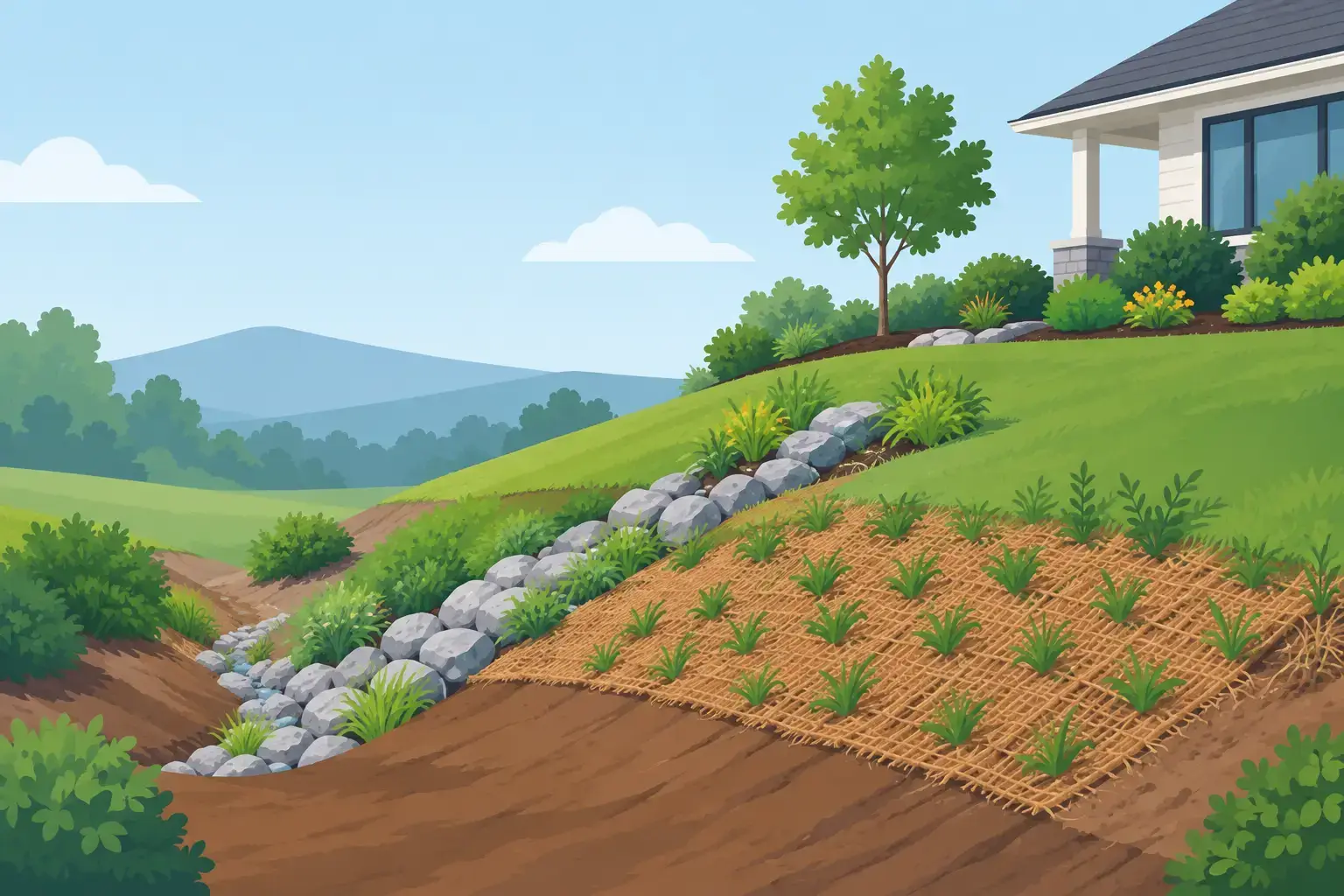
New plants need time to establish. During that period, mulch protects the soil between them. Use an even layer of shredded bark, wood chips, or another appropriate mulch, keeping it away from plant stems and building siding. Mulch reduces raindrop impact and helps retain moisture, but it can wash downhill on very steep or heavily flowing sites. In those areas, erosion-control blanket, jute netting, or structural terracing may be a better fit.
Avoid leaving freshly cleared ground open through the wet season. If tree or brush removal is necessary, have a follow-up plan for grading, planting, and temporary stabilization. Clearing solves an access or safety problem, but exposed soil needs protection soon afterward.
Use Retaining Walls Where the Grade Needs Support
Some slopes cannot be stabilized with planting alone. A retaining wall can hold back soil, create usable flat areas, and reduce the length and steepness of a slope. It can also make room for garden beds, paths, patios, or safer access around the property.
A retaining wall must be built for the conditions behind it, not just for its finished appearance. Drainage stone, drain pipe, proper base preparation, backfill, and appropriate wall height all affect performance. Without drainage relief, water pressure can build behind the wall and lead to leaning, cracking, or failure.
Wall selection depends on the project. Segmental block, concrete, natural stone, and timber each have different visual and structural considerations. A short decorative garden wall may be straightforward, while a taller wall supporting a driveway, building area, or steep grade may require engineering and permits. This is not the place to guess, particularly on a wet site.
Break Up Long Slopes and Fast Water
Water gains energy as it travels downhill. Long, uninterrupted slopes are more likely to develop ruts and washouts than slopes broken into smaller sections. Terracing, retaining walls, planted berms, and carefully shaped swales can reduce the distance water travels at full speed.
Where runoff must cross a slope, use materials that can handle it. Rock-lined channels, drainage systems, and stabilized outlets help protect the soil at high-flow points. Simply placing loose rock over an active washout may not solve the issue if water can still flow beneath it or around the edges. The underlying grade and drainage path must be addressed first.
Hardscape can also help manage access and soil disturbance. A defined paver path or set of steps keeps people from wearing a trail into a hillside. The key is making sure the hardscape has proper base preparation and drainage so it does not redirect water toward a vulnerable area.
Limit Compaction and Soil Disturbance
Compacted soil absorbs less water. When rain cannot soak in, it runs across the surface and carries sediment with it. Heavy equipment, repeated vehicle traffic, and construction activity can compact soil quickly, particularly when the ground is wet.
Keep vehicles and equipment out of soft landscape areas whenever possible. Establish access routes before a project begins, and restore compacted areas with appropriate soil preparation before planting. On lawns, aeration and overseeding may improve infiltration on mild problem areas, though they will not fix a major grading or drainage issue.
Be cautious with aggressive tilling on slopes. It can loosen the soil temporarily and make it more likely to wash away. Any soil work should be followed by coverage, such as seed, sod, mulch, erosion-control fabric, or planting.
Maintain the System Through the Wet Season
Erosion prevention needs occasional inspection. Clear leaves and debris from drains, catch basins, swales, and gutters before heavy rain. Replace washed-out mulch, refill low spots before they become channels, and check whether downspout outlets are still directing water where intended.
Watch retaining walls for new movement, separated blocks, cracking, or wet spots that persist behind the wall. Check planted slopes for bare patches and replace struggling plants before gaps expand. A healthy root system becomes more effective over time, but only if the plants are watered and maintained during establishment.
If you see muddy runoff leaving the property, a widening trench, a slope moving toward a structure, or water collecting near a foundation, bring in a professional before the next major storm. Sunrise Landscaping can evaluate the connected needs of a site, from tree and stump removal through grading, drainage, planting, retaining walls, and hardscape construction.
The most dependable erosion solution is one that fits the property rather than forcing a standard fix onto every slope. Address water first, protect the soil immediately, and build the landscape so it can handle the next season of rain as well as it handles a dry summer day.