
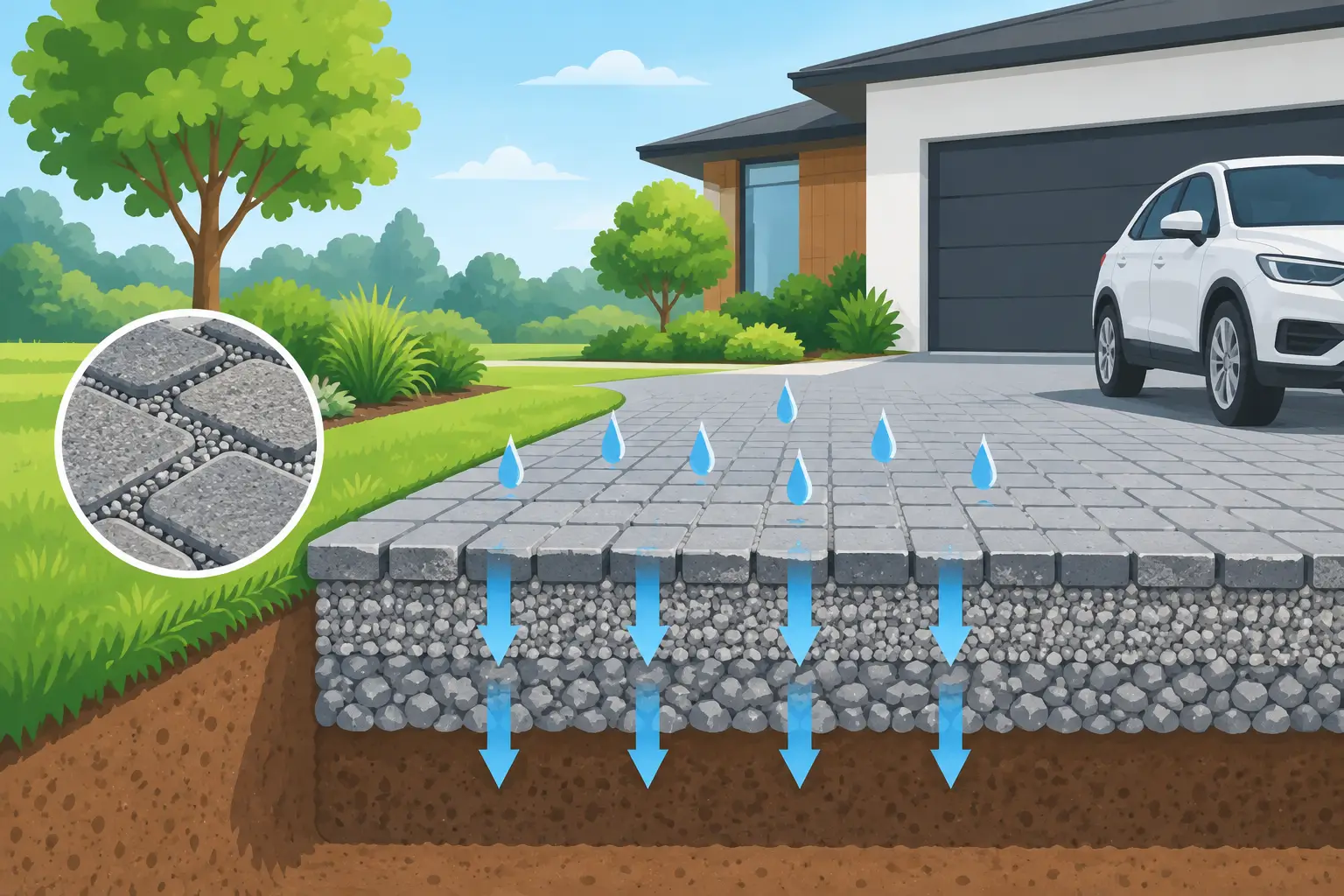
A driveway or patio should not become a collection point for every hard rain. In Olympia and across the Puget Sound area, wet-season runoff can leave standing water, muddy edges, slick walkways, and stressed landscape beds. Permeable pavements offer a practical way to create a finished hardscape surface while allowing water to move through the pavement and into a properly built stone base below.
This is not a one-size-fits-all paving choice. The performance of a permeable driveway, walkway, patio, or parking area depends on the site, the soil, the grade, the intended traffic, and the construction beneath the surface. When those pieces work together, permeable paving can improve both drainage and curb appeal.
What Are Permeable Pavements?
Permeable pavements are surface systems designed to let rainwater pass through openings, joints, or the pavement material itself. Instead of directing all water across the surface toward a drain, the system temporarily stores and filters water in layers of clean aggregate below the finished grade.
Permeable pavers are one of the most familiar options for residential properties. Individual concrete or stone units are installed with wider joints filled with small aggregate, creating channels for water to enter the base. Other systems include porous concrete and porous asphalt, which use an open-graded material mix to allow water through the surface.
For most homes, paver systems are a strong fit because they can be shaped around patios, driveways, paths, garden borders, and retaining walls. They also make localized repairs more manageable. If a section needs to be accessed or corrected later, individual pavers can often be lifted and reset rather than replacing an entire slab.
Why Drainage Matters on Olympia Properties
A paved area changes how water moves through a property. Traditional concrete and asphalt shed water quickly. That may be acceptable when the area has reliable slope, drainage infrastructure, and a clear path away from buildings. On many local properties, though, runoff ends up where it is least useful: against a foundation, at the bottom of a sloped yard, beside a garage, or in a low spot that never fully dries.
Permeable pavement slows that process. Rain enters the surface, moves through aggregate layers, and either infiltrates into suitable native soil or is directed through a planned underdrain system. The goal is not simply to make water disappear. It is to manage it deliberately so the hardscape, landscape, and building work together.
This approach can be especially useful for homes with compacted lawn areas, small lots with limited drainage routes, or patios that sit near planting beds. Commercial properties can also use permeable paving for walkways, parking stalls, courtyards, and low-traffic access areas where puddling affects appearance and safety.
The Base Does the Real Work
The visible pavers matter, but the base is where a permeable paving project succeeds or fails. A standard paver installation and a permeable paver installation may look similar from above, yet the material layers and drainage design serve different purposes.
Below a permeable surface, the contractor typically builds an open-graded aggregate base with enough depth to support the expected load and temporarily hold rainwater. A properly selected separation fabric may be used where needed to keep native fines from migrating into the stone. Edge restraints hold the field of pavers in place, and careful grading keeps the finished surface stable and functional.
The depth of that base varies. A pedestrian path does not need the same structure as a driveway used by trucks, RVs, or frequent deliveries. Soil conditions also change the plan. Dense clay soils may drain slowly, which can make an underdrain, overflow route, or a different pavement solution necessary. A site review should account for existing drainage patterns, utilities, nearby foundations, and the final elevations around doors, garages, and landscape features.
Where Permeable Paving Makes Sense
Permeable pavers can be an excellent choice for a patio where conventional runoff would wash across a lawn or pool along an edge. They work well for garden paths, front entries, pool surrounds, and outdoor living spaces that need a clean, durable surface without adding another large runoff area.
Driveways are another common application. A permeable driveway can provide a finished arrival area while reducing the water that sheets toward the street or garage. The key is matching the system to the vehicle load. A driveway that sees only passenger vehicles can be designed differently from one used by work trucks, trailers, or heavier equipment.
For commercial properties, permeable pavement may be useful in select parking zones, walkways, courtyards, and overflow areas. It is often most practical as part of a larger drainage plan rather than as the answer for every paved square foot. Areas with constant turning, heavy wheel loads, or frequent material deliveries may require conventional pavement or a more heavily engineered system.
When Another Surface May Be Better
Permeable paving is not automatically the best answer for every wet yard. If a property has unstable slopes, severe groundwater concerns, contaminated soil, or a location that cannot accept infiltration, the project may need a different drainage approach. In some cases, conventional concrete or pavers combined with correctly placed drains, catch basins, or grading improvements will be the better long-term investment.
Maintenance expectations also deserve an honest conversation. Permeable joints and porous surfaces can gradually collect fine sediment, leaves, mulch, and soil. If those openings clog, water will no longer move through the pavement as intended. Periodic sweeping and, when needed, vacuum cleaning help keep the system open. Nearby bare soil, gravel driveways, and loose mulch can increase the maintenance burden.
Winter maintenance requires care as well. Use de-icing products appropriate for the selected material, and avoid pushing sediment into the joints when plowing. A professional installation can help protect the surface, but no pavement system is maintenance-free.
Design It as Part of the Whole Property
The best hardscape projects solve more than one problem. A permeable patio may create space for outdoor dining while improving drainage near a planting bed. A driveway rebuild may be the right time to correct grade, add a retaining wall, install lighting, replace failing irrigation lines, or create a safer front walk.
Material selection also matters. Pavers come in colors, textures, and patterns that can complement a modern home, a traditional entry, or a natural garden setting. The surface should fit the property, but appearance should not override performance. A smooth paver may suit a patio, while a textured option may provide better traction on a sloped walk. Borders, steps, and transitions should be planned with drainage in mind instead of added as an afterthought.
Sunrise Landscaping LLC can coordinate hardscape construction with grading, landscape installation, retaining walls, irrigation, and site preparation, helping property owners avoid the gaps that can occur when several contractors work independently.
Questions to Ask Before You Build
Before selecting a permeable paving system, ask how water currently moves across the site and where it needs to go after the project is complete. Ask whether the native soil can accept infiltration, how deep the aggregate base should be, and whether an underdrain is recommended. Make sure the proposed surface is rated for the traffic it will receive, not just the traffic expected during the first year.
It is also worth discussing access during construction. Excavation, aggregate delivery, and compaction equipment need room to work. Existing trees, irrigation, utilities, fences, and finished landscape areas can affect both the installation approach and the final cost. A clear plan early in the process prevents a drainage improvement from creating avoidable disruption elsewhere in the yard.
A well-built permeable surface should feel simple once it is finished: a stable place to park, walk, gather, and enjoy the property after the rain. The work behind that result is careful site evaluation, proper excavation, and a base designed for the conditions under your feet. If standing water or runoff is limiting how you use your outdoor space, an on-site estimate is the right place to start.