A quiet fountain beside a patio can make a compact Olympia yard feel finished. A pond can turn an underused slope into a destination. But water feature installation Olympia WA is not just about choosing a feature that looks good in a photo. It needs to work with year-round rain, site drainage, electrical access, existing trees, and the way you actually use the property.
For homeowners and property managers, the best results come from treating the water feature as part of the overall landscape plan. The surrounding pavers, planting beds, irrigation, grading, and access paths all affect how the finished space looks and how much maintenance it requires.
Start With How You Want the Space to Work
The first decision is not the pump, liner, or stone. It is the purpose of the feature. Some properties need a focal point at the front entry. Others need sound near a deck or patio to soften traffic noise and create more privacy. A commercial property may benefit from a clean, low-maintenance fountain that improves curb appeal without adding a difficult maintenance task.
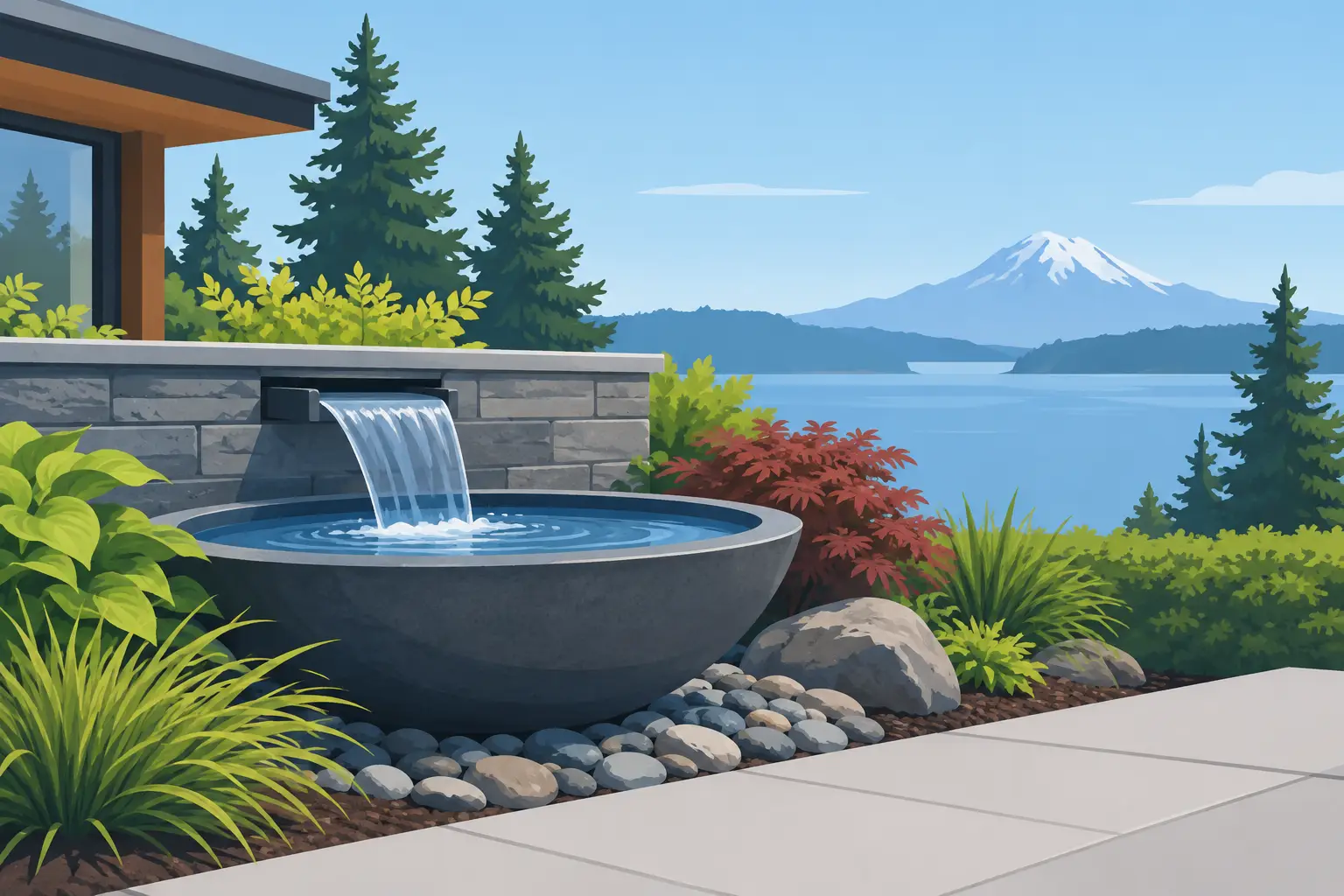
A bubbling urn, basalt column, or small disappearing fountain is often a good fit where space is limited. Water circulates through a hidden reservoir below grade, so there is no open pond edge. These features provide movement and sound while keeping the layout simple.
Ponds and pondless waterfalls make more sense when the yard has room for natural stone, planting areas, and viewing space. They can create a stronger visual impact, especially on a sloped lot, but they require more planning. Fish, aquatic plants, leaves from nearby trees, and exposed water all add ongoing care considerations.
The right choice depends on the property. A feature should suit the scale of the yard rather than compete with it. On a smaller lot, one well-placed fountain may feel more useful than a large pond that consumes the main outdoor living area.
Site Conditions That Matter in Olympia
Olympia’s wet season is one reason a professional site review matters. Rainfall does not automatically make a water feature easier to install. In fact, poor drainage can cause a feature to shift, collect sediment, overflow into planting areas, or create muddy conditions around a patio.
Before construction begins, the site should be evaluated for slope, low spots, soil conditions, runoff patterns, and nearby roof drainage. Water from downspouts should not be directed into a pond or reservoir unless the system has been designed for that volume. Heavy rain can quickly overwhelm a feature that was built only for normal circulation.
Tree roots are another common issue in established Olympia neighborhoods. Large roots can complicate excavation, affect the location of underground plumbing, and drop leaves or needles into open water. Sometimes the best solution is to position the feature away from mature trees. In other cases, tree or stump removal may be part of preparing the site for a larger landscape improvement.
Access also affects the plan. Natural stone, gravel, concrete, excavation equipment, and reservoir components have to reach the work area safely. A narrow side yard or steep backyard may not prevent the project, but it can change the feature design, construction sequence, and budget.
Water Feature Installation Olympia WA: Build the Base Correctly
What is below the finished stone matters as much as what is visible above it. A water feature needs stable excavation, proper base preparation, durable liner or reservoir components, correctly sized plumbing, and a pump that matches the desired flow.
For a pondless waterfall or fountain, the hidden reservoir needs enough capacity to supply the system without running dry. The pump vault, intake area, and access point should allow for future service. A feature that looks clean on installation day but makes pump access difficult will be frustrating later.
Stone placement is also more than decoration. Each piece needs to sit securely and direct water where intended. Water should flow naturally over the visible surfaces without splashing excessively onto walkways, siding, or seating areas. The surrounding grade should guide rainwater away from structures and avoid creating a standing-water problem near the feature.
Electrical work should be planned early. Most circulating features require a dedicated, protected power source. The equipment location needs to remain accessible while staying visually unobtrusive. Trying to add power after a patio, planting bed, or finished lawn is already in place can mean unnecessary disruption.
This is where integrated project planning saves time. If a property also needs pavers, a retaining wall, irrigation adjustments, concrete work, or new planting beds, those pieces should be coordinated before construction starts. The feature can then feel built into the landscape rather than added as an afterthought.
Match Materials to the Property
Natural stone works well in the Puget Sound landscape because it can tie a water feature to existing retaining walls, garden edges, or paver areas. It also holds up well when installed on a properly prepared base. The style can be informal and natural or more structured, depending on the home and surrounding hardscape.
Formal properties may be better suited to a clean-lined basin, wall fountain, or architectural spillway. These features often pair well with modern patios, concrete surfaces, and simple planting palettes. A more rustic setting may call for irregular boulders, a low stream effect, and evergreen planting that keeps the area attractive through winter.
Planting makes a major difference. Ornamental grasses, ferns, sedges, shrubs, and groundcovers can soften stone while leaving enough open space for maintenance. Plant choices should account for sun exposure and moisture around the feature. Plants placed too close can crowd access panels, drop debris into the water, or conceal areas that need periodic inspection.
Plan for Maintenance Before You Build
Every water feature requires some maintenance. The goal is not to eliminate it, but to choose a system with a level of care that fits the owner.
A pondless feature is usually the simplest option. It may need occasional debris removal, pump checks, seasonal cleaning, and monitoring during cold weather. A pond may require more regular attention to water quality, algae control, filtration, and leaf removal. Features located under deciduous trees usually need more cleaning in fall.
Good construction reduces avoidable maintenance. A properly sized pump, accessible filter area, stable stonework, and thoughtful planting layout make routine care easier. It is also worth considering what happens during extended dry weather. A recirculating feature needs enough water in its reservoir, and automatic fill options may be appropriate in some installations.
Commercial properties should be especially realistic about upkeep. A modest, durable feature that can be inspected easily is often a better investment than a complex design with difficult access and constant service needs.
Budget for the Whole Outdoor Area
Water feature costs vary widely based on size, excavation, stone selection, drainage work, electrical needs, access, and the condition of the existing yard. A simple recirculating fountain is generally less involved than a pond with waterfalls, filtration, planting, and surrounding hardscape.
The least expensive first idea is not always the best long-term value. A feature installed without proper drainage or base preparation may require repairs that cost more than doing the site work correctly from the beginning. Likewise, installing a waterfall before correcting a failing retaining edge or uneven patio can create a disjointed project.
An estimate should account for the full scope, including removal work, grading, utility considerations, material delivery, installation, and finish landscaping. If the project is being completed in phases, the first phase should still protect the long-term plan. For example, electrical conduit or drainage sleeves can be installed before a future patio is built.
Questions to Settle Before Construction
Before approving a design, make sure the plan answers a few practical questions. Where will the feature be viewed from most often? How will the pump and filters be accessed? Where will stormwater go during heavy rain? Will nearby plant roots or falling leaves create extra work? And does the feature leave enough room for the patio, lawn, garden, or walking path the property still needs?
A clear plan prevents a water feature from becoming an isolated yard project. Sunrise Landscaping LLC can help property owners coordinate water features with grading, hardscapes, planting, irrigation, and site preparation so the finished work functions as one outdoor space.
A well-built feature should give you a reason to spend more time outside, not another problem to manage. Start with the site, choose a design that fits the property, and build the surrounding landscape to support it for the long run.