A sloped yard can look like a landscaping problem, but it is usually a water-management and soil-support problem first. Knowing how to stabilize sloped yards starts with watching what happens during a hard Puget Sound rain: where water enters the property, where it speeds up, and where soil, mulch, or gravel collects at the bottom.
A small incline with established grass may only need better planting and drainage control. A steep bank near a driveway, foundation, patio, or neighboring property may require engineered grading, a retaining wall, and a coordinated drainage plan. The right approach depends on slope angle, soil type, water volume, existing structures, and the consequences if the hillside moves.
Start With the Cause of the Slope Problem
Erosion is often blamed on rain, but water is only part of the picture. Downspouts that empty onto a hillside, an uphill neighbor’s runoff, poor surface grading, saturated clay soil, and failing landscape borders can all weaken a slope. Tree removal can also change a site over time when root systems that once held soil in place are gone.
Walk the yard after rain and look for visible clues: exposed roots, channels cut through soil, muddy water crossing a patio, leaning fence posts, cracked concrete, bulging landscape walls, or bare areas where grass will not hold. These signs help separate a cosmetic issue from an active drainage or structural concern.
It is also worth locating utilities, irrigation lines, septic components, and property boundaries before planning construction. On a tight residential lot, moving even a few feet of soil can affect drainage patterns, access, and adjacent structures.
Control Water Before Building a Retaining Wall
A retaining wall can be an effective solution, but it should not be used as a dam for uncontrolled runoff. Water trapped behind a wall adds pressure, saturates the soil, and can eventually cause movement or failure. Drainage needs to be designed with the wall, not added as an afterthought.
Surface water should be directed to a safe discharge area using swales, catch basins, drain pipe, or carefully shaped grading. Downspouts may need extensions or connections that carry roof runoff away from the slope. In many Olympia-area yards, this basic work makes a major difference because long wet seasons keep soil saturated well after a storm ends.
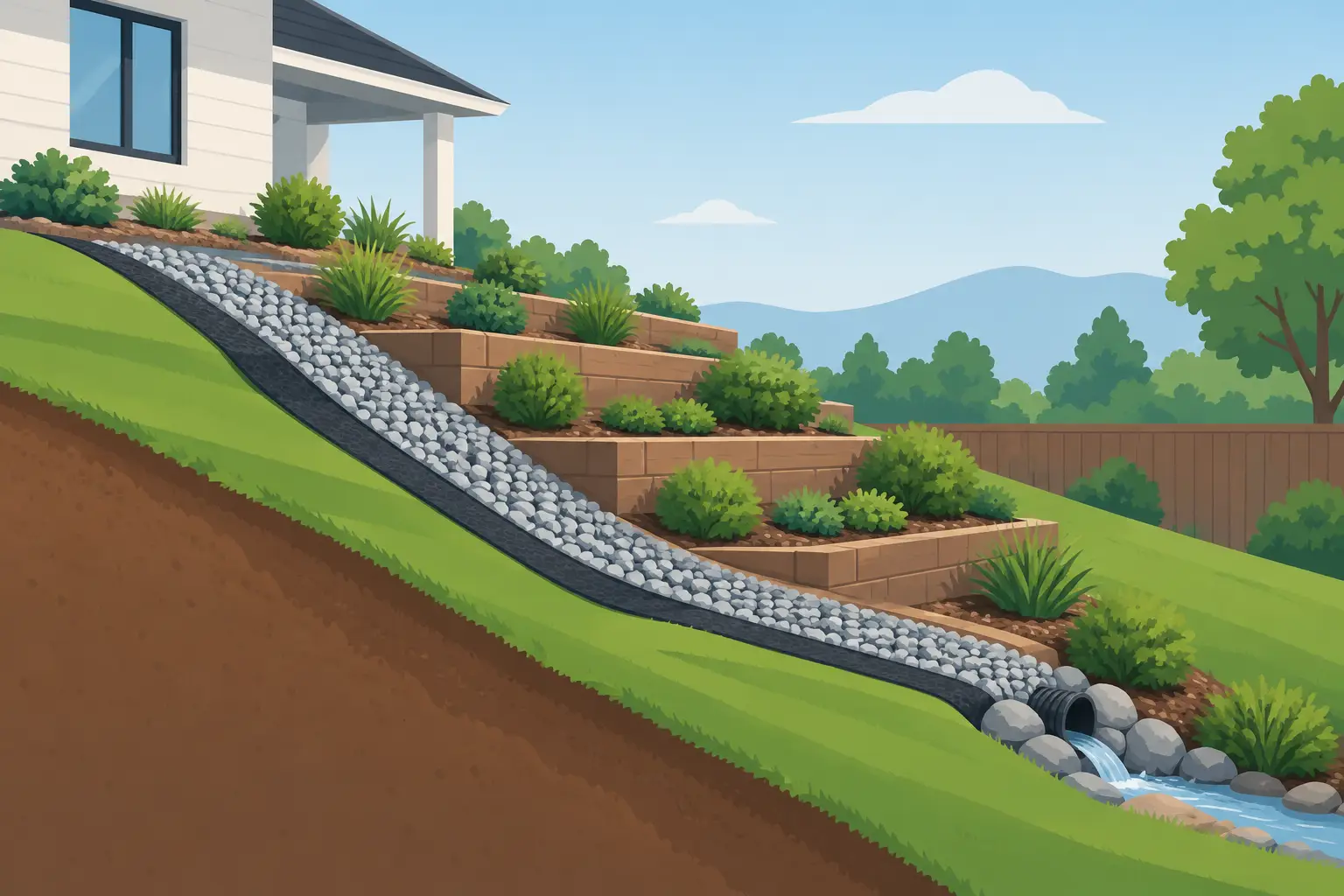
Subsurface drainage may be appropriate where water seeps from a bank or gathers behind a planned wall. A typical retaining-wall drainage system includes free-draining gravel, perforated pipe, filter fabric where needed, and a clear outlet. The details matter. Pipe with no outlet, gravel mixed with native soil, or drainage aimed toward a foundation creates a new problem instead of solving the old one.
Do not send runoff downhill without a plan
Sending water to the lowest point may seem logical, but the bottom of a slope is often where a lawn, fence, driveway, wet area, or neighboring lot begins. Water needs a managed path and a stable place to go. Local site conditions and stormwater requirements can affect the best solution, especially for larger grading or hardscape projects.
Choose the Right Way to Stabilize the Grade
There is no single answer for every hillside. The goal is to reduce erosion, manage water, and create usable outdoor space without overbuilding the site.
Regrading works best on gradual slopes
For a modest slope, regrading can soften the pitch and move water away from the home. This may involve bringing in soil, cutting high areas, compacting in layers, and establishing a final grade that supports lawn, planting beds, or a patio area.
Regrading is often a good fit when the yard has enough room to spread the elevation change over distance. It becomes less practical when the slope is close to a property line, building, driveway, or mature tree that must remain. Excessive cutting can also expose unstable soil or create drainage issues uphill.
Terracing makes steep yards more usable
Terracing breaks one long slope into a series of shorter, flatter levels. Each level can become a planting bed, lawn area, path, seating space, or access route. It slows water down and gives soil more opportunities to stay in place.
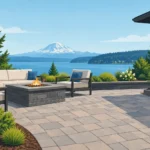
Terraces need proper transitions between levels. Short retaining walls, stone borders, steps, and compacted pathways can all be part of the design. For homeowners who want more than erosion control, terracing is often the best way to turn a difficult backyard into functional outdoor space.
Retaining walls support soil where space is limited
A retaining wall is appropriate when soil needs to be held back at a sharper elevation change. Segmental block, natural stone, concrete, timber, and poured concrete each have different uses, appearance, and service life. Material selection should follow the wall’s height, expected loads, drainage needs, and desired finish.
Walls supporting driveways, structures, steep grades, or significant soil loads deserve careful planning. Taller walls may require permits, engineered plans, reinforcement, and specialized drainage details. A wall that looks simple from the front can have a substantial gravel base, compacted backfill, geogrid reinforcement, and drain system behind it.
Use Plants and Ground Cover as Part of the System
Plants will not correct a failing slope or replace structural support, but they are valuable once the grade and drainage are stable. Roots help protect the soil surface, reduce raindrop impact, and slow shallow runoff. Dense planting also limits bare soil, which is especially vulnerable during winter rain.
Choose plants that suit the slope’s sun exposure and moisture level. A dry, south-facing bank needs a different planting plan than a shaded hillside that stays damp through spring. Native and site-adapted shrubs, spreading ground covers, ornamental grasses, and deep-rooted perennials can all have a role.
Avoid relying on loose bark mulch alone on a steep grade. It can wash downhill and expose the soil beneath it. Erosion-control blankets, anchored jute netting, rock accents, and planted ground cover may provide better early protection while plants establish. Irrigation should be adjusted carefully so new plants receive enough water without creating runoff.
Build Access Into the Design
A stabilized slope still needs maintenance. If the yard is too steep to reach safely, pruning, weeding, drain cleaning, and irrigation repairs become difficult. Steps, switchback paths, paver landings, handrails, and defined work areas can make the property safer and more practical.
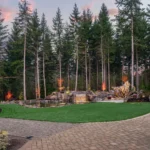
This is where a complete landscape plan pays off. Instead of treating a wall, drain, and planting bed as separate jobs, the project can coordinate site clearing, grading, retaining work, hardscapes, irrigation, and final landscaping. The result is usually cleaner, more durable, and easier to maintain.
When a Sloped Yard Needs Professional Help
Some warning signs should not be handled as a weekend landscaping project. Call for an evaluation if you see a slope moving toward a house or driveway, a wall that is leaning or bulging, recurring washouts, deep cracks in the ground, water collecting near the foundation, or a failing bank near a neighbor’s property.
Professional installation is also a sound choice when equipment access is limited, significant excavation is required, trees or stumps must be removed, or the project combines retaining walls with patios, drainage, or concrete work. Sunrise Landscaping LLC can help Olympia-area property owners plan connected site improvements rather than piecing together temporary fixes.
A stable yard should still feel like a yard, not a construction zone. With water directed properly, soil supported where it needs to be, and plants selected for the conditions, a difficult slope can become a safer, more useful part of the property for years to come.