Olympia yards work hard. They absorb months of rain, dry out during summer stretches, manage runoff from roofs and driveways, and often sit on slopes, compacted soils, or shaded lots. Sustainable landscaping is not about making a property look wild or leaving it unfinished. It is a practical way to build an outdoor space that uses water wisely, holds up to local weather, and requires less correction over time.
For homeowners and property managers in the Puget Sound area, the best approach starts with the conditions already on site. Drainage, soil, sun exposure, existing trees, access, and how the space will be used should guide the design. A landscape that fits the property will usually look better and cost less to maintain than one that fights it.
Start With Water and Drainage
Water is often the first issue to solve in Western Washington. A beautiful planting plan will not perform well if runoff is washing soil across a walkway, pooling against a foundation, or saturating a lawn all winter. Sustainable site work begins by identifying where water comes from, where it collects, and where it can safely go.
Grading is a major part of that work. Even small changes in slope can direct water away from buildings and high-traffic areas. On a sloped lot, retaining walls may be needed to create stable, usable levels while limiting erosion. The wall itself is only part of the job. Proper base preparation, drainage material, and a planned outlet for collected water matter just as much.
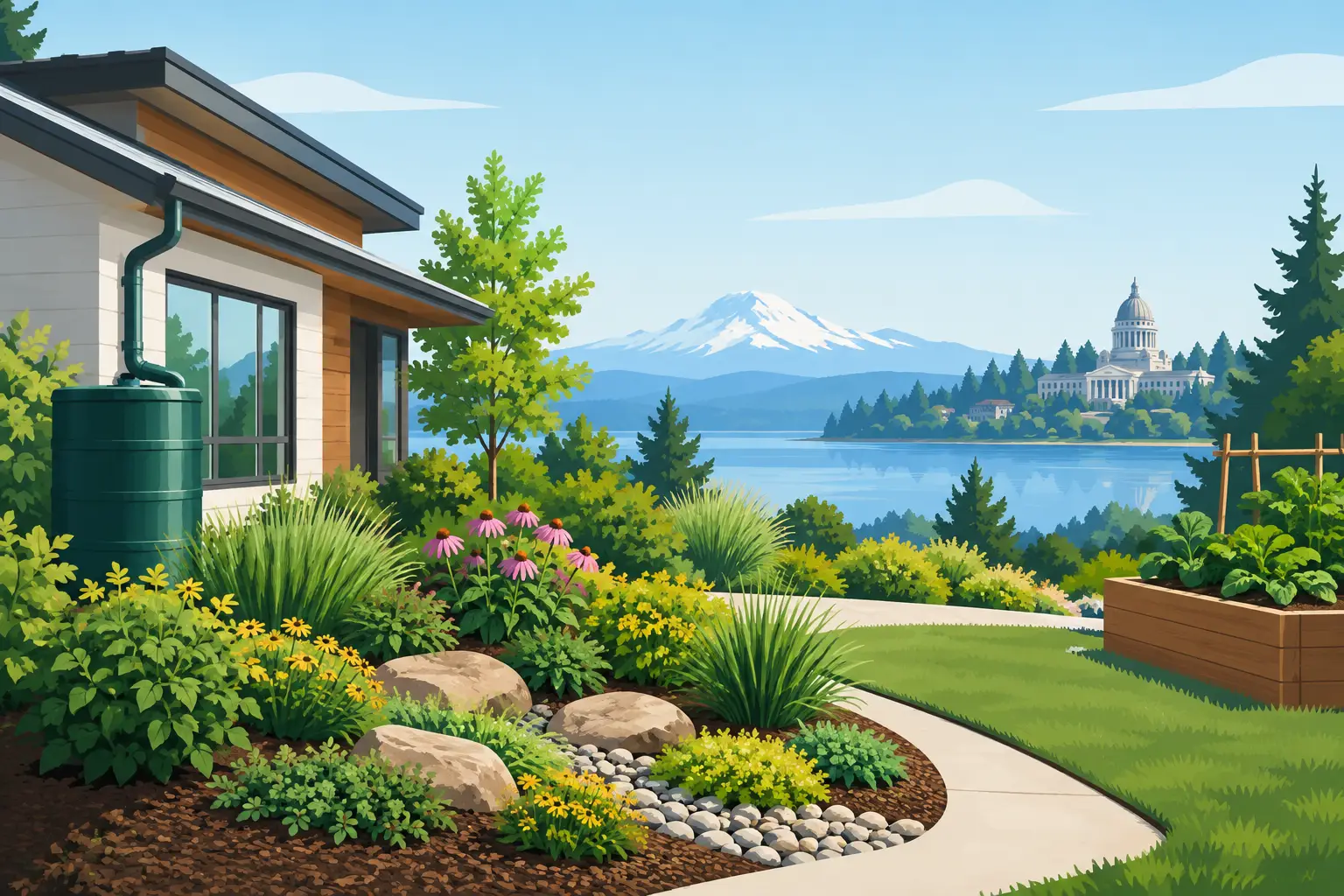
In suitable areas, rain gardens, planted swales, and permeable ground surfaces can slow runoff rather than sending all of it toward a drain or downhill neighbor. These options are not right for every property. Heavy clay, a high water table, tight setbacks, and steep grades can limit where infiltration features belong. The goal is controlled drainage, not simply moving water out of sight.
Choose Plants for the Actual Site
A sustainable landscape does not require a yard made entirely of native plants, although Northwest natives can be excellent choices. It means selecting plants that match the amount of sun, moisture, soil depth, and maintenance the site can realistically provide.
A wet, partly shaded corner needs a different plant palette than a south-facing front bed near a hot concrete driveway. Grouping plants with similar water needs makes irrigation easier to manage and prevents overwatering. It also reduces the common problem of placing thirsty plants beside drought-tolerant ones, then trying to keep both healthy with the same schedule.
Trees deserve special attention. Healthy, well-positioned trees provide shade, help moderate summer heat, and add long-term character to a property. But overcrowded, damaged, or poorly located trees can create safety concerns, block needed sunlight, interfere with construction, or stress nearby plantings. Tree removal and stump removal can be part of a sustainable plan when they make room for safer drainage, better access, or replacement planting that suits the site.
Planting in layers also helps. Groundcovers protect bare soil, shrubs add structure, and trees or taller plantings create shade and screening. Mulch around beds limits weeds, protects soil moisture, and reduces erosion from heavy rain. Keep mulch pulled back from trunks and stems so it does not trap excess moisture against the plant.
Avoid the High-Maintenance Lawn Default
Lawn still has a place in many yards. It gives children and pets room to play, creates open views, and can make a landscape feel organized. The problem comes when turf is installed in places where it struggles, such as deep shade, narrow side yards, steep slopes, or constantly wet ground.
Reducing lawn in those areas can lower mowing, watering, and fertilizer needs. A planted bed, gravel path, paver landing, or low-maintenance groundcover may be a better fit. This does not mean replacing every lawn with rock. Large gravel-only areas can become hot, collect debris, and offer little benefit for drainage or habitat. The best material depends on how the area needs to function.
Build Hardscapes That Last
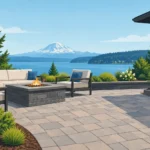
Patios, walkways, driveways, and seating areas are part of sustainable landscaping when they are built for long service life and managed runoff. A failing patio or sinking paver path creates repeated repair work and can direct water where it does not belong.
Pavers are a practical choice for many Olympia properties because individual units can be repaired if settling occurs. Proper excavation, a compacted base, edge restraint, and drainage planning are what make the difference. A decorative surface installed over poor preparation will not stay level for long, especially through wet winters.
Permeable pavers can be useful where site conditions support them. They allow water to move through joints and into a prepared base below, helping reduce surface pooling. However, they require routine attention to keep joints from filling with sediment. On sites with poor drainage or heavy runoff from larger roofs, other drainage measures may still be necessary.
Wood decks, concrete, natural stone, and conventional paver patios can also be responsible choices when they are sized correctly and built to suit the grade. Rather than covering the entire backyard with hard surface, consider where a durable gathering area, access path, or equipment pad will provide the most value. Leaving room for planting beds, trees, and drainage routes keeps the property more balanced.
Use Irrigation With a Plan
Summer irrigation keeps many landscapes looking healthy, but more water is not better water management. An efficient system applies water where roots need it and adjusts to weather, soil, and plant type.
Drip irrigation works well in planting beds because it delivers water near the soil rather than spraying foliage and sidewalks. Lawn zones should be separate from shrub and perennial zones so each area can receive an appropriate schedule. Smart controllers and rain sensors can help, but they do not replace a properly designed system. Broken heads, overspray, poor pressure, and incorrect zoning waste water no matter how advanced the controller is.
Newly installed plants usually need consistent watering while they establish. Over time, a well-chosen plant palette should need less frequent supplemental water than a landscape built around plants that are poorly matched to the site. Seasonal checkups are worthwhile, particularly before dry weather begins and after winter damage is visible.
Improve Soil Instead of Covering Its Problems
Healthy soil supports stronger roots, better drainage, and more resilient plants. Construction activity often leaves soil compacted, thin, or mixed with debris. Before planting, it may need to be loosened, shaped, and amended with compost or quality topsoil appropriate for the project.
Amendments should solve a known issue, not become a habit. Adding organic matter can improve many garden beds, but it will not fix a major grade problem or make a waterlogged area suitable for every plant. In some cases, the right answer is drainage work, raised planting areas, or choosing plants that tolerate wet soils.
Keeping leaves, mulch, and plant debris out of drains also protects the property and surrounding drainage system. Fallen leaves can be reused as compost material or managed in garden beds when they are free of disease and spread in a way that will not smother plants.
Plan for Maintenance From Day One
The most sustainable design is one the owner can reasonably maintain. That includes access for mowing, pruning, irrigation repairs, and seasonal cleanup. It also means choosing materials and planting densities that will not outgrow the space in two or three years.
For commercial properties, maintenance planning should account for visibility, pedestrian traffic, parking areas, and safety. A low planting near an entry may preserve sight lines better than dense shrubs. Durable walkways and clear drainage reduce trip hazards and help keep the property presentable during wet weather.
A complete project often needs several trades working in the right order: tree or stump removal, grading, retaining work, irrigation, hardscape construction, and planting. Coordinating those pieces as one plan avoids tearing out newly installed work to correct a drainage or access issue later. Sunrise Landscaping LLC can help Olympia-area property owners move from site evaluation through construction with those connections in mind.
A good outdoor space should not demand constant rescue. Start with how your property handles water and how you want to use it, then build a landscape that can do both jobs well for years to come.