A walkway should do more than connect the driveway to the front door. On a wet Olympia property, it needs to provide stable footing, direct people where they need to go, and hold up through rain, shade, roots, and seasonal ground movement. Well-built paver walkways do all three while adding definition and curb appeal to the landscape.
For homeowners, a paver walkway can solve a muddy route across the yard, replace cracked concrete, or create a clear connection between a patio, garden, gate, and entry. For commercial properties, it can improve access, reduce worn turf, and create a cleaner first impression. The results depend less on choosing the most expensive paver and more on planning the route, drainage, base, and edges correctly.
Start With How the Walkway Will Be Used
The best route is not always the straightest line on a site plan. It should follow how people naturally move through the property. If family members regularly cut across a lawn from the driveway to the side gate, a curved walkway may make more sense than asking them to follow a formal path around a planting bed.
A front walk should generally feel generous enough for two people to pass without stepping onto the landscaping. A secondary garden path can be narrower, particularly when it is intended for one person at a time. The right width also depends on practical needs. A path used for rolling garbage bins, garden carts, or mobility equipment needs more room and a smoother, less textured surface.
Before construction begins, it helps to mark the proposed route with stakes, marking paint, or a garden hose. Walk it several times from each direction. Look at the route from the street, front windows, driveway, and patio. This simple step often reveals where a curve feels forced, where a planting bed needs more space, or where the walkway should line up with an existing gate or landing.
Drainage Is the Foundation of Durable Paver Walkways
In Thurston County and throughout the Puget Sound area, drainage is not an afterthought. Water that sits beneath or alongside a walkway can soften the base, move fine material, and eventually create low spots or shifting pavers. A path may look level when it is installed but still need a slight, intentional slope to move surface water away from the house and other structures.
The exact drainage approach depends on the property. A gently sloped yard may only require proper grading and a compacted base. A low area, clay-heavy soil, downspout discharge, or a walkway located against a foundation may require more planning. In some cases, the solution includes adjusting surrounding grades, redirecting roof runoff, adding a drain, or tying the walkway into a broader landscape drainage plan.
This is one reason a walkway should be considered with the rest of the property rather than as an isolated strip of pavers. If a retaining wall, patio, irrigation update, tree removal, or new planting areas are already planned, coordinating the work can prevent rework later. For example, it is better to address roots from a removed tree or a drainage problem before a new walkway is installed over the area.
The Base Matters More Than the Surface
Pavers are durable materials, but they cannot compensate for poor preparation below. A lasting installation begins with excavation to accommodate the paver thickness, bedding layer, compacted aggregate base, and the finished elevation needed at adjacent lawns, driveways, doors, and patios.
The base depth is not one-size-fits-all. Soil conditions, drainage, slope, paver type, and expected use all affect the required preparation. A simple pedestrian garden path has different demands than a walkway that meets a driveway or receives regular loads from carts and equipment. Wet or unstable soils may also need additional attention before aggregate is placed.
After excavation, the subgrade should be shaped and compacted. Aggregate base material is installed in lifts and compacted thoroughly, rather than dumped in at full depth and pressed down only at the surface. A properly prepared bedding layer then allows the pavers to be set evenly at the planned grade.
Edge restraint is another detail that should not be skipped. It holds the outer pavers in place and helps the field of pavers resist spreading over time. Without a secure edge, joint material can loosen and the path can gradually lose its clean lines.
Choose Materials for the Property, Not Just the Sample Board
Concrete pavers are a practical choice for many Olympia-area properties because they offer a wide range of colors, shapes, and laying patterns. They can suit a traditional home, a newer development, a cottage garden, or a more contemporary outdoor space. Individual units can also be repaired more easily than a large poured slab if settling or damage occurs in one area.
Color selection deserves a practical look. Very light pavers can show dirt, moss, and leaf staining more quickly in shady locations. Very dark surfaces may show dust and pollen. Blended gray, tan, charcoal, and earth-tone options often work well with Northwest homes because they pair naturally with stone, siding, wood fencing, and evergreen plantings.
Texture affects both appearance and traction. Smooth pavers can create a clean, formal look, while textured or tumbled options may better suit garden paths and properties with a more natural landscape style. Near entries, slopes, or consistently damp areas, traction should be part of the decision.
Pattern also matters. Running bond patterns are clean and efficient for rectangular paths. Herringbone patterns provide a more traditional appearance and can offer strong interlock. Larger-format pavers can make a broad front walk feel modern, but they require careful grading because unevenness is easier to notice across larger pieces.
Design the Walkway as Part of the Landscape
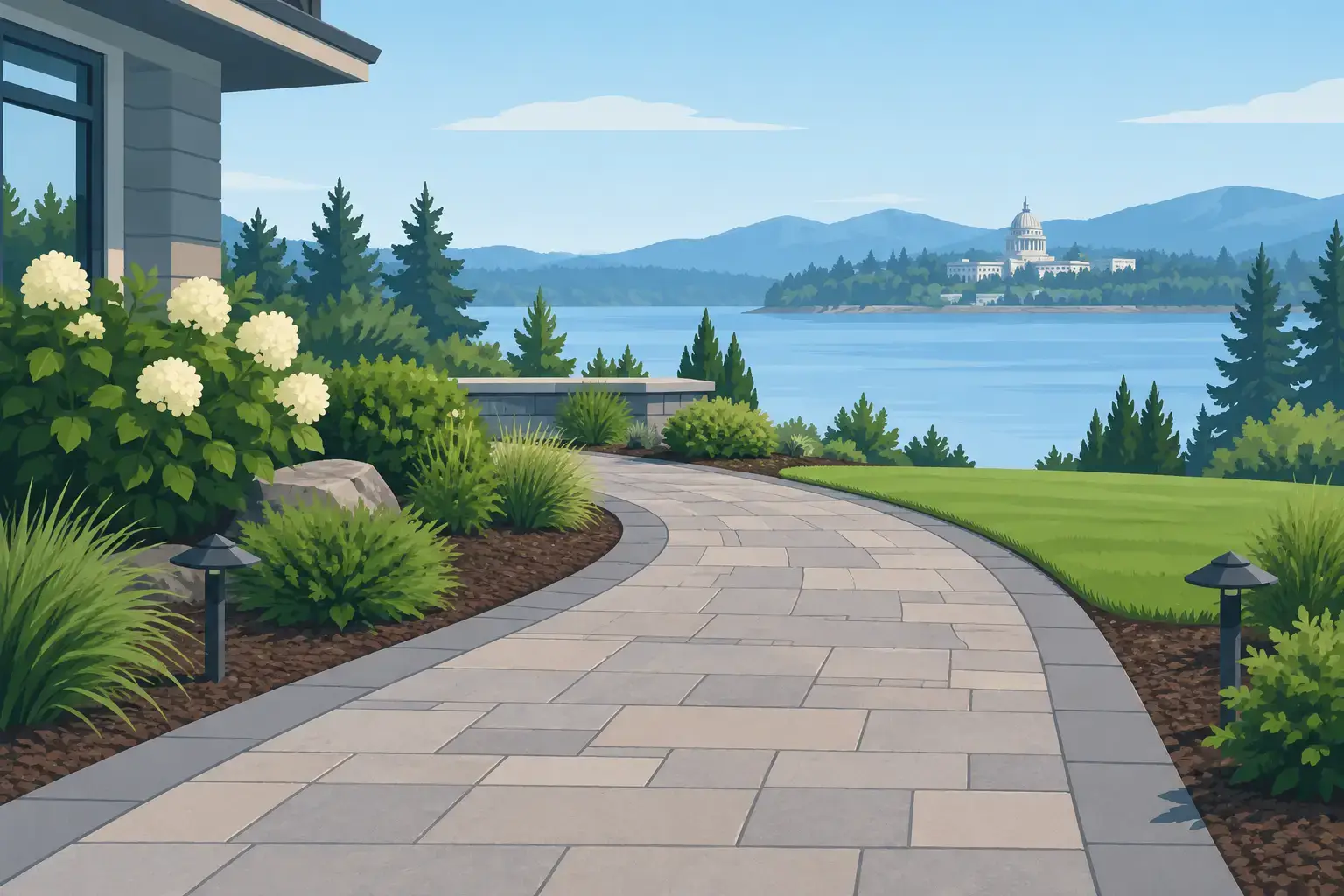
A walkway can be functional without looking like an afterthought. The edges create an opportunity to frame the route with lawn, groundcover, mulch beds, low shrubs, lighting, or seasonal color. The key is leaving enough room for the landscape to mature without crowding the path.
At a front entry, a wider landing or small paver pad can give visitors a comfortable place to pause while opening the door. At a side yard, a narrow path may need a practical gravel margin or durable planting choice rather than a high-maintenance bed. Near patios, matching or complementary pavers can make separate outdoor areas feel connected.
Transitions deserve attention too. A walkway should meet a driveway, porch, step, or patio without abrupt elevation changes that create a trip hazard. If the property has grade changes, steps, terraced landings, or retaining walls may be safer and more attractive than trying to force a steep walkway across the slope.
Lighting can improve safety and make the path easier to use during dark winter afternoons. It should illuminate changes in direction, steps, and entrances without turning the yard into a runway. Low-profile fixtures, integrated wall lighting, or carefully placed path lights can provide guidance while keeping the focus on the landscape.
Plan for Northwest Maintenance
Paver walkways require maintenance, but routine care is straightforward when the installation is sound. Sweep leaves, needles, and soil from the surface so organic material does not hold moisture in the joints. In shaded areas, remove moss and algae before they become slick or leave staining.
Joint material may need to be refreshed over time, particularly after heavy rain, pressure washing, or frequent use. Polymer-enhanced joint sands can help reduce washout and discourage weed growth when installed correctly, though they are not a permanent guarantee against every volunteer plant. Weeds often arrive from windblown seed and surface debris, not from beneath a properly built base.
Avoid aggressive pressure washing that strips joint material or damages the paver surface. If a paver settles because of a localized issue, the advantage of an interlocking system is that affected units can usually be lifted, the base corrected, and the surface reset. Addressing a small low spot early is less costly than waiting for water to create a larger problem.
When Professional Installation Makes Sense
A short, level garden path may appear simple, but site conditions can quickly make the project more complex. Existing drainage concerns, roots, steep grades, utility locations, tight access, retaining needs, and connections to structures all affect the work. The same is true when a walkway is part of a larger project involving patios, irrigation, landscaping, concrete, or site clearing.
Sunrise Landscaping LLC can evaluate the full outdoor project, from walkway layout and hardscape construction to surrounding planting, drainage-related grading, and finishing work. That coordinated approach is useful when the path needs to fit into a larger property improvement rather than stand alone.
A good paver walkway should feel easy to use from the first day and continue to do its job through the wettest months of the year. Start with the route people actually take, build the base for the conditions beneath it, and give water a planned place to go. The finished path will look better because it was designed to work.