A driveway can look simple from the street, but it carries daily vehicle weight, directs rainwater, and sets the tone for the rest of the property. Choosing a concrete driveway contractor Olympia WA homeowners and property managers can rely on means looking beyond the finished surface. The work below the concrete, the slope of the site, and the way water moves across the property all affect whether a new driveway performs well for years.
Olympia’s wet seasons make planning especially important. A driveway that is poured without proper base preparation or drainage can settle, crack, or send water toward a garage, foundation, walkway, or landscape bed. The right contractor evaluates the entire site before recommending a scope of work.
What a Concrete Driveway Needs to Handle
A residential driveway must support more than a parked car. It handles repeated turning, braking, delivery vehicles, seasonal moisture, and the occasional heavier truck. Commercial and multi-unit properties may have even greater demands from regular traffic, waste collection, or service access.
Concrete is a durable choice because it provides a clean, stable surface with relatively low routine maintenance. It can also complement patios, retaining walls, walkways, paver areas, and landscape improvements. But concrete is not a one-size-fits-all material. Its thickness, reinforcement, finish, joints, and base all need to match the intended use and site conditions.
A standard passenger-vehicle driveway does not necessarily need the same build as an RV pad, a steep driveway, or an access lane used by heavier equipment. A good estimate should reflect those differences instead of treating every project as a basic square-footage calculation.
Start With the Ground and Drainage
The most visible part of a concrete driveway is the slab. The long-term performance often depends more on what happens underneath it.
Base Preparation Is Not Optional
Before concrete is placed, the contractor should assess existing soil, remove unsuitable material where needed, establish the correct grade, and install and compact a stable aggregate base. Soft, wet, or poorly compacted ground can move under load. When that happens, concrete may crack or settle even if the surface initially looked well finished.
The amount of preparation depends on the property. An established driveway replacement may have a sound base that can be improved and reused in places. A new driveway through lawn, disturbed ground, or an area affected by tree removal may require more excavation and base work. The practical answer is often, “it depends on the site,” and that is a better answer than a quick promise made without seeing the property.
Water Must Have a Place to Go
Olympia rain puts drainage at the center of driveway design. The surface needs enough slope to shed water, but not so much that vehicle access becomes uncomfortable or runoff creates a new problem downhill. The plan should consider nearby structures, existing drains, sidewalk connections, landscape beds, retaining walls, and neighboring grades.
In some cases, changing the driveway slope alone is enough. In others, the project may need a drain, swale, gravel edge, catch basin, or coordinated grading work. A contractor with landscaping and hardscape experience can look at the driveway as part of the larger property rather than as an isolated slab.
What to Discuss With a Concrete Driveway Contractor in Olympia WA
A clear conversation before work begins helps prevent surprises. Property owners should be ready to explain how the driveway is used, whether drainage has been a problem, and if future improvements are planned. A new driveway can be an ideal time to coordinate a front walk, patio, retaining wall, gate opening, irrigation adjustment, or landscape grading.
Ask how the contractor plans to handle demolition and removal of an existing surface. Old concrete, asphalt, roots, stumps, and buried material can affect both budget and schedule. If the existing driveway has cracks, ask what caused them. Cracks from normal aging are different from cracks caused by drainage failure, base movement, large roots, or settlement near a structure.
Also ask about the proposed slab thickness and where thicker sections may be appropriate. Driveway edges, areas near a garage, and locations that receive heavier loads often deserve closer attention. Control joints should be planned to help manage normal concrete movement and reduce random cracking. They do not guarantee a crack-free slab, but they are a necessary part of professional concrete work.
Choose a Finish That Fits the Property
The finish affects appearance, traction, maintenance, and cost. A traditional broom finish remains a practical choice for many Olympia driveways because it provides reliable traction in wet conditions and works with a wide range of home styles.
Decorative options may include exposed aggregate, colored concrete, stamped patterns, or border details. These can create a more customized entrance, especially when the driveway connects to a patio, walkway, or landscape design. They also require realistic expectations. Decorative concrete can cost more, and some finishes need additional care to keep their appearance over time.
For a property where function is the first priority, a clean broom finish with well-planned edges and joints may be the best value. For a front entry intended to make a stronger visual statement, decorative details can be worthwhile when the budget and maintenance expectations align.
Know What the Estimate Includes
A useful driveway estimate should make the scope understandable. It should identify the general area being replaced or installed, demolition or excavation needs, base preparation, concrete placement, finish, jointing, cleanup, and any drainage or grading work that is part of the project.
Price matters, but the lowest number can leave out the work that protects the driveway from early failure. Compare estimates based on the full scope, not just the final total. If one proposal includes removal, compaction, drainage corrections, and site cleanup while another only lists concrete placement, they are not equivalent projects.
Timing is also worth discussing. Concrete work depends on site access and weather conditions. Wet ground can slow excavation, and rain or temperature conditions may affect scheduling and finishing. A capable contractor plans for these realities instead of pretending that every job follows the same calendar.
Plan for Access, Curing, and Daily Use
A driveway project affects how people enter and use the property during construction. Before work starts, discuss vehicle access, parking, deliveries, pets, gates, and any special mobility needs. Commercial property managers should also consider customer access, tenant communication, and safety around the work area.
After placement, concrete needs time to cure before it is ready for vehicle traffic. The contractor should provide clear instructions for when people, vehicles, and heavy loads can use the new surface. Rushing that timeline can damage edges or mark the finish.
Once the driveway is in service, keep it reasonably clean and address drainage issues early. Avoid allowing heavy point loads where the slab was not designed for them. If you use de-icing products during freezing weather, choose products that are appropriate for concrete and follow the contractor’s guidance, especially during the first winter.
A Driveway Project Can Improve the Whole Site
Driveway work often reveals connected outdoor issues: a low area that holds water, an awkward walkway, overgrown roots, a failing retaining edge, or a front yard that needs a more finished layout. Coordinating those improvements can reduce duplicate excavation and create a better result than handling each item separately.
Sunrise Landscaping LLC helps Olympia-area property owners plan concrete, grading, hardscape, landscaping, and site-clearing work as connected parts of one outdoor project. That can be particularly helpful when a driveway needs more than a new surface.
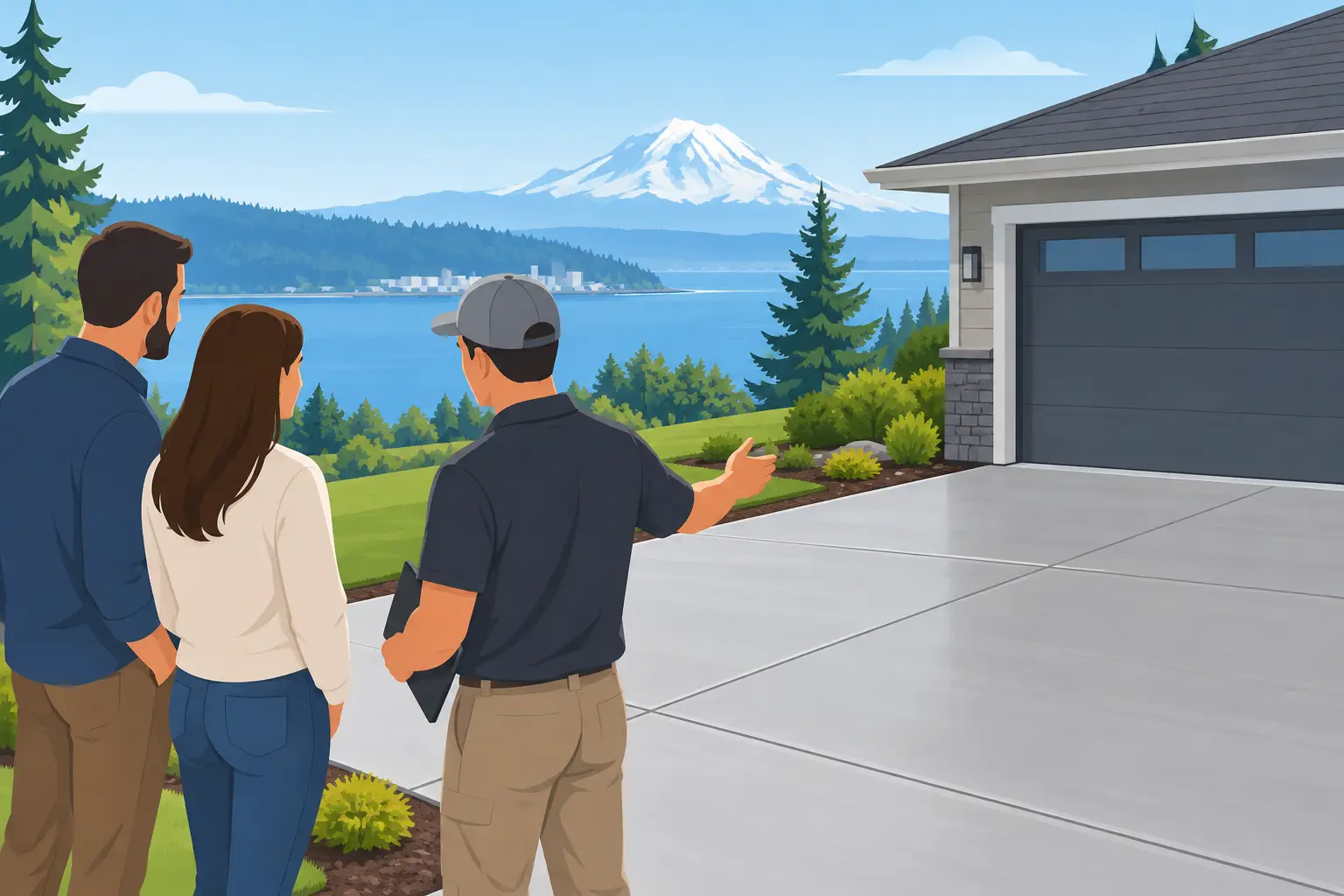
The best next step is a site-specific estimate. Walk the property with a contractor, point out standing water, cracks, access concerns, and future plans, then choose a driveway design built for how your property actually works.