A puddle that remains in the same part of the yard for days is not just an inconvenience. In Olympia, frequent seasonal rain can turn a low spot into a muddy lawn, wash soil from a slope, and send water toward a crawl space or foundation. Effective yard drainage Olympia property owners can rely on starts with identifying where water is coming from, where it is collecting, and where it can safely go.
The right solution is rarely a single trench or drain. A durable drainage plan considers roof runoff, existing grades, soil conditions, driveways, retaining walls, planting beds, and neighboring properties. The goal is simple: move excess water away from buildings, high-use areas, and vulnerable slopes without creating a new problem elsewhere.
Start With the Source of the Water
Before installing a French drain, catch basin, or new lawn, look at the pattern of water across the property. Walk the yard during a steady rain if possible. Notice where downspouts discharge, where puddles form, and whether water flows toward the house, garage, patio, or driveway.
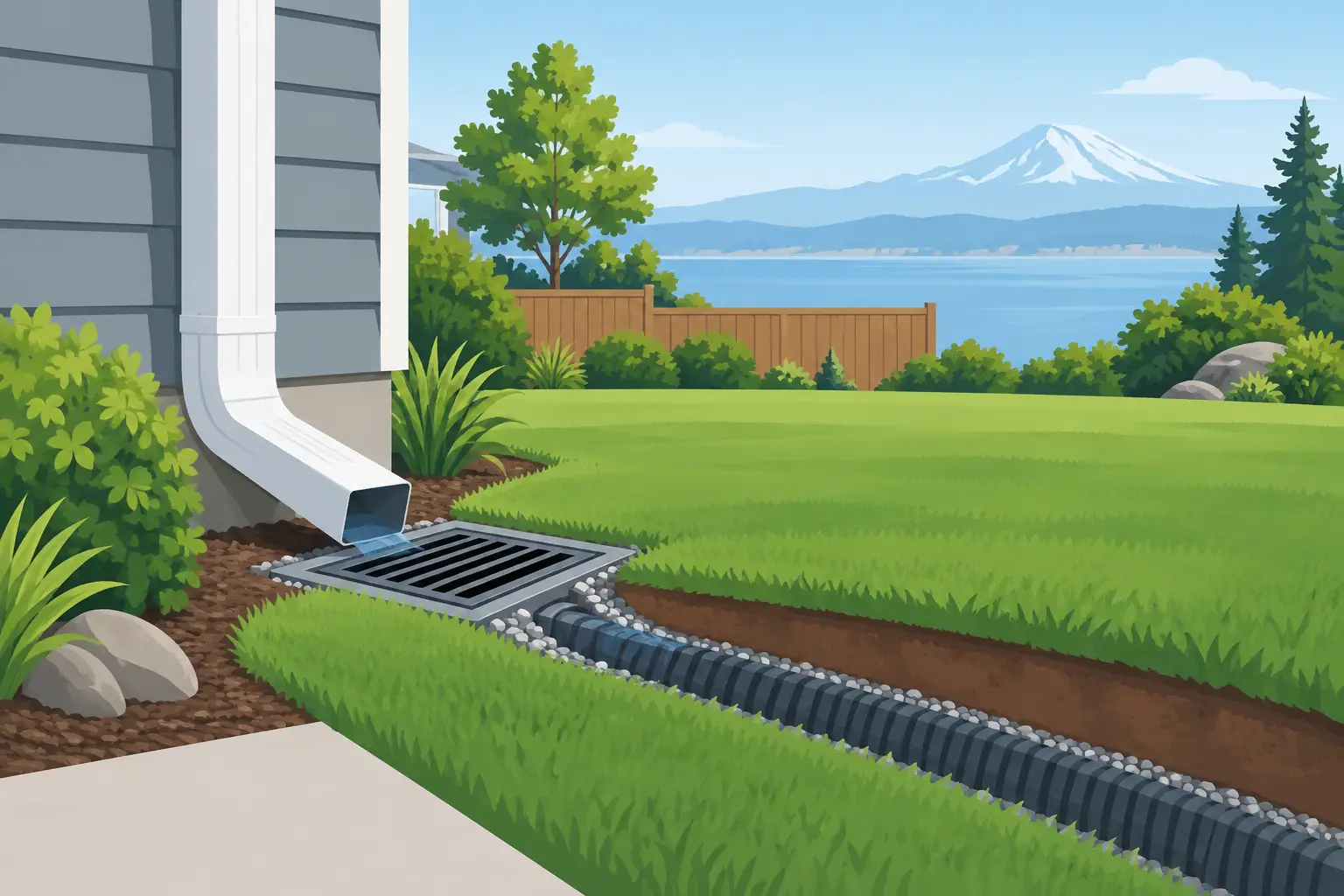
Roof runoff is one of the most common causes of saturated areas near a home. A downspout that empties beside the foundation can release a surprising amount of water during a Puget Sound storm. Extending the discharge point or tying it into a properly designed solid drain line may solve a localized issue. That water still needs an approved destination, however. Sending it into a low corner of the yard simply moves the problem.
Surface runoff is another frequent issue. A neighboring slope, compacted lawn, or driveway may direct water into the property faster than the soil can absorb it. In other cases, the yard itself has settled over time, creating a basin that holds water after every rainfall.
Drainage Problems That Need More Than Topsoil
Adding soil and seed can improve a shallow low spot, but it will not correct every drainage problem. If water continues to return, there is usually an underlying grading or collection issue to address.
Standing water in the lawn can damage turf roots and leave the area soft enough to rut under foot traffic or lawn equipment. Along a foundation, repeated saturation may contribute to moisture concerns in a crawl space or basement. Water moving down a slope can carry mulch, soil, and gravel with it, exposing roots and weakening planting areas. On commercial properties, puddled walkways and icy winter surfaces can also become safety concerns.
Drainage work should be planned around the severity and location of the issue. A small wet lawn area may benefit from regrading and improved soil conditions. Water collecting at the bottom of a paved driveway may require a channel drain or catch basin. A sloped site with erosion may need grading, drainage piping, and a retaining wall working together.
Common Yard Drainage Olympia Solutions
The most effective approach depends on site conditions. These are common drainage methods used on residential and commercial properties in the Olympia area.
Regrading and Swales
Grading changes the shape of the ground so surface water naturally moves away from structures and toward a suitable outlet. Even a modest adjustment can make a major difference when a yard slopes toward a home or patio.
A swale is a broad, shallow channel built into the landscape. It guides runoff across the property without looking like an open ditch. Swales work well when there is enough room and a natural direction for water to travel. They can be finished with lawn, river rock, or carefully selected plantings depending on the site and the amount of flow.
Regrading is often the best first step because buried drain systems cannot fully compensate for a yard that continually directs water toward the building. The finished grade should account for future landscaping, patios, garden beds, and access routes.
French Drains and Perforated Pipe
A French drain collects groundwater through a perforated pipe surrounded by clean drain rock. Water enters the system through the gravel, flows into the pipe, and is carried to a suitable discharge point.
This option is useful for persistently wet soil, soggy lawn edges, and seepage along slopes. It is not always the right choice for heavy surface runoff. If water is flowing quickly across pavement or down a driveway, a surface collection system may be more effective than relying on water to filter down through rock.
Proper installation matters. The trench needs the correct slope, suitable fabric and aggregate, and a reliable outlet. A drain without adequate fall or a clear discharge location can fill with sediment and provide little long-term benefit.
Catch Basins and Solid Drain Lines
Catch basins collect water at low points, often near downspouts, driveways, patios, and paved areas. They connect to solid pipe that carries water away from the collection point. This is a practical choice when water arrives quickly during rain and needs to be captured before it spreads across the property.
Catch basins should be sized and located for the amount of runoff expected. They also need maintenance access. Leaves, pine needles, and landscape debris can collect in the basin, so periodic cleaning is part of keeping the system working.
Channel Drains for Hardscape Areas
Patios, walkways, and driveways create hard surfaces that shed water quickly. A channel drain is a narrow, grated drain installed across a paved area to intercept runoff. It can help keep water from entering a garage, pooling at a doorway, or running across a frequently used walkway.
Channel drains are especially useful during hardscape upgrades. Installing drainage at the same time as a new paver patio, concrete path, or driveway improvement is generally more efficient than cutting into completed work later. The drain elevation and paving slope must be coordinated so water actually reaches the channel.
Retaining Walls and Slope Drainage
A retaining wall holds soil, but it also changes how water behaves on a property. Water behind a wall needs a planned path out. Without drainage rock, pipe, and appropriate outlets, hydrostatic pressure can build behind the wall and contribute to movement, staining, or failure.
For sloped yards, drainage and retaining work should be treated as one project. Surface water may need to be redirected before it reaches the wall, while subsurface drainage relieves moisture behind it. Vegetation, rock, and stable grading can also help protect exposed soil from erosion.
Plan for the Whole Property, Not One Wet Spot
It is tempting to fix only the visible puddle. But drainage is connected to the rest of the site. A new drain outlet must not discharge against a neighbor’s fence, create erosion at the property line, or overload an already wet area. Local requirements and site conditions may affect where water can be directed.
This is also why landscaping decisions matter. Dense clay soil, compacted fill, large roof areas, mature trees, and new hardscape all influence drainage. Removing a tree or stump may open a site for regrading, but the work should include a plan for the changed surface and runoff patterns. Adding a patio may improve outdoor use while increasing the amount of water that needs collection and routing.
A contractor who can coordinate excavation, grading, drainage, hardscape, retaining walls, and landscape restoration can reduce gaps between trades. Sunrise Landscaping LLC approaches these connected outdoor improvements as site projects rather than isolated tasks, helping property owners move from drainage correction to a finished, usable yard.
Signs It Is Time to Request a Drainage Estimate
Some drainage issues are clear after the first major storm. Others develop slowly and become noticeable when lawns fail, soil erodes, or a patio begins to settle. Request an evaluation when water regularly stands for more than a day, soil washes from slopes or beds, downspouts discharge near the foundation, or runoff reaches a garage, crawl space, walkway, or driveway.
Take note of when the problem occurs. Does the area stay wet all winter, or only during heavy rain? Is the source a roof downspout, a hillside, a neighboring grade, or a paved surface? Photos taken during rainfall can help show the flow pattern and support a more accurate drainage plan.
A well-planned drainage project should leave the property more useful, not just temporarily drier. When grading, collection, drainage piping, and landscape finishes are designed together, rainy Olympia weather becomes something the yard is built to handle rather than something it has to endure.